
Company
American Alloy Fabricators, Inc.
Location
Philadelphia, PA
Job type
Full-time
Salary
25–32 an hour
Via
ZipRecruiter
Apply on
Job description
Job Title: GTAW / FCAW Welder Fabricator
The Role: Precision Welding for High-Stakes Manufacturing
Are you a master of your craft when it comes to stainless steel and nickel alloys? We are an ASME code manufacturer looking for a highly skilled Welder Fabricator to join our team. If you take pride in producing high-pressure, code-compliant welds and have a passion for precision, we want to hear from you.
Key Responsibilities
- Specialized Welding: Perform high-quality GTAW (TIG) and FCAW (Flux-Core) welding on stainless steel and nickel alloys.
- Code Fabrication: Manufacture components according to strict ASME code standards.
- Blueprint Mastery: Read and interpret technical drawings and weld symbols to ensure 100% accuracy.
- Quality Control: Maintain a keen eye for detail to ensure every weld passes rigorous inspections.
Requirements
- Technical Expertise: Proven experience with GTAW and FCAW processes.
- Alloy Experience: Extensive background working with stainless steel and nickel alloys.
- Code Knowledge: Solid understanding of ASME welding codes and manufacturing standards.
- Fabrication Skills: Ability to fit and fabricate parts from start to finish.
Frequently asked questions
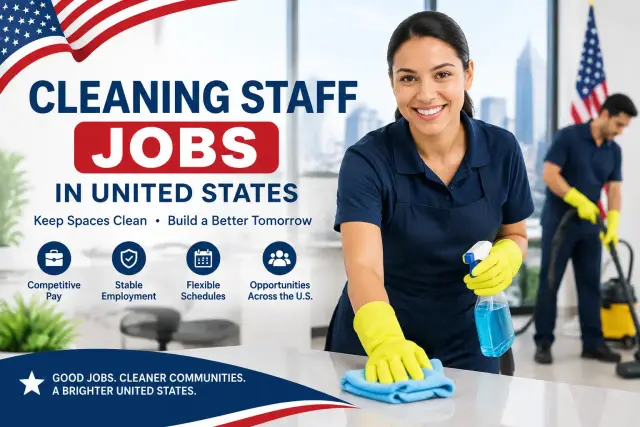
Quick answers about Cleaning Staff Jobs
Q
How much do cleaning staff jobs pay in 2026?
In 2026, the federal minimum wage is $7.25 per hour for covered, nonexempt workers. Many states and localities set higher minimum wages, and eligible workers must receive the higher applicable rate.
Source: U.S. Department of Labor
Q
Do cleaning staff get overtime pay?
Covered, nonexempt employees generally must receive overtime pay for hours worked over 40 in a workweek. The overtime rate is at least 1.5 times their regular rate; for example, a $15 hourly rate generally means at least $22.50 per overtime hour.
Source: U.S. Department of Labor
Q
What safety training should I get before using cleaning chemicals?
Employers must provide information and training on hazardous chemicals when employees are initially assigned to work with them and whenever a new chemical hazard is introduced. Employers must also make safety data sheets readily accessible to workers during each work shift.
Source: Occupational Safety and Health Administration
Q
Can a teenager work a cleaning job?
Federal rules allow 14- and 15-year-olds to perform certain cleanup work, subject to restrictions on duties and hours. They generally may work no more than 3 hours on a school day or 18 hours in a school week; state rules may be more protective.
Source: U.S. Department of Labor