


Security guard jobs are found almost everywhere in India, from apartment buildings and shopping malls to factories, hospitals and offices. They can be a good option if you're looking for steady work, don't mind being on your feet and are comfortable dealing with people.
The job is about more than standing at a gate. Depending on the workplace, a security guard may check visitors, patrol a property, monitor cameras, maintain records and respond when something goes wrong. Here's a practical look at eligibility, salaries, training and how to find genuine security guard vacancies in India.
What does a security guard do?
A security guard helps protect people, property and equipment. The exact duties depend on the employer. A guard at a residential society might manage visitor entry, while someone at a warehouse could check vehicles and delivery records.
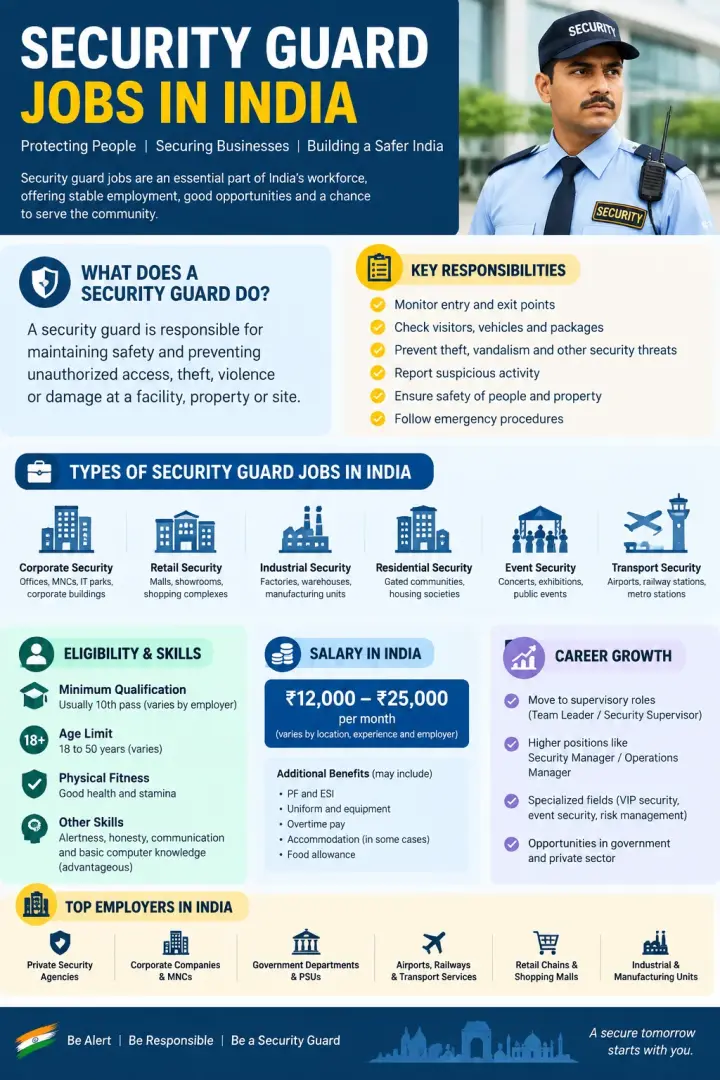
Common responsibilities include:
- Checking the identity of visitors and allowing authorised entry.
- Patrolling buildings, gates, parking areas or perimeters.
- Keeping visitor registers and reporting unusual activity.
- Monitoring CCTV screens and alerting supervisors when needed.
- Helping people during fire alarms, medical incidents or evacuations.
- Checking bags or vehicles when required by workplace procedures.
- Handing over important information to the next shift.
Guards generally work under instructions from a supervisor. They aren't a substitute for the police, and they should call the appropriate authorities when a situation requires it.
Types of security guard jobs in India
Residential security guard
Residential guards work at apartment complexes, housing societies and gated communities. They usually check visitors, manage deliveries, monitor entry points and assist residents. Patience and polite communication matter because you'll interact with people throughout the day.
Office and corporate security guard
Corporate security roles may involve checking employee IDs, issuing visitor passes and monitoring access to office floors. Some employers prefer candidates who can use basic computers, write reports or communicate in English as well as a local language.
Factory and warehouse security guard
These jobs often involve vehicle checks, patrols, gate registers and monitoring the movement of goods. Factories may have additional safety rules, so guards need to follow site instructions carefully and know how to raise an alarm.
Retail, mall and hotel security guard
In shops, malls and hotels, guards help manage entrances and crowds while keeping an eye out for safety concerns. Customer service is a big part of the role. You may work weekends, holidays or evening shifts when these places are busiest.
Hospital security guard
Hospital guards help manage visitors, protect restricted areas and respond to disturbances. The environment can be stressful, so a calm manner and respect for patients and families are especially important.
CCTV operator and security supervisor
A CCTV operator monitors camera feeds, records incidents and informs the relevant team about suspicious activity. Security supervisors manage guards, prepare duty rosters and check that site procedures are followed. These roles may require computer skills, experience or additional training.
Security guard salary in India
Security guard salaries vary widely by city, employer, duty hours, experience and the type of site. As a rough guide, some entry-level roles may offer around ₹10,000 to ₹18,000 per month, while experienced guards or those working at larger sites may see offers of ₹18,000 to ₹25,000 or more. Supervisor and specialist roles can pay more.
These are broad estimates, not guaranteed rates. A salary that looks higher may involve longer shifts or fewer benefits, so compare the full terms before accepting. Pay must also meet the applicable minimum wage for the location and category of work.
Ask the employer to explain:
- The monthly gross salary and expected take-home pay.
- Shift length, weekly rest day and overtime arrangements.
- Whether salary is paid directly or through a contractor.
- Applicable deductions and benefits, including PF or ESI where eligible.
- Whether uniforms, accommodation, meals or transport are provided or charged for.
Honestly, it's worth getting these details in writing. A clear offer letter makes it easier to spot a mismatch between the advertisement and the actual job.
Eligibility for security guard jobs
Requirements differ between employers and roles. Many private employers ask for candidates who have passed Class 10, although some accept other education levels. Jobs involving reports, computers or supervision may ask for Class 12 or higher qualifications.
For private security agency roles, applicants generally need to meet the relevant age, character verification and training requirements under the Private Security Agencies (Regulation) Act, commonly called PSARA, and applicable state rules. Employers may also conduct medical or physical fitness checks. Read the vacancy carefully rather than assuming every guard job has the same requirements.
Common qualities employers look for include:
- Alertness and attention to detail.
- Basic reading, writing and record-keeping skills.
- The ability to stand, walk or patrol as required by the role.
- Polite communication and a calm approach to conflict.
- Willingness to work shifts and follow instructions.
Some positions are open to freshers, while others prefer experienced guards or ex-servicemen. Women can also apply for security roles; some workplaces specifically recruit women guards for female visitor screening and other duties.
Training and documents you may need
Private security agencies are responsible for meeting applicable licensing and training requirements. A genuine employer should explain the training needed for the position and how it will be provided. Training may cover access control, observation, reporting, emergency response, basic first aid and workplace conduct.
PSARA licensing applies to the private security agency; it isn't a general licence that every individual guard should buy online. Be cautious if someone claims you must immediately pay them for a personal PSARA licence to get hired.
When applying, keep copies of the following ready if requested:
- A valid identity and address proof.
- Educational certificates, where relevant.
- A recent photograph and an updated resume.
- Previous employment or training certificates, if available.
- Bank details after a legitimate offer, for salary payment.
- Documents needed for background or police verification, as instructed by the employer.
Don't hand over original documents to an unverified recruiter. Ask why a document is needed and keep copies of anything you submit.
How to find security guard jobs near you
Start with a simple search such as “security guard jobs near me” or “security guard jobs in Pune”. Add your preferred city, shift or workplace to narrow the results. You can also look for “security supervisor jobs” or “CCTV operator jobs” if you have relevant experience.
Other places to check include:
- The National Career Service portal and other reputable job websites.
- Websites or offices of established private security agencies.
- Job listings from hospitals, hotels, malls and facility management companies.
- Local employment exchanges and job fairs.
- Referrals from people you trust who already work in security.
The National Career Service portal is a government employment service, and its services are free. Still, check the employer and vacancy details independently before sharing sensitive information or attending an interview.
How to apply for a security guard vacancy
You don't need a fancy resume, but it should be easy to read. Include your name, phone number, location, education and any security experience. Mention useful training, languages, computer knowledge and the types of shifts you're willing to work.
If you're a fresher, focus on reliability, communication skills and any relevant experience dealing with the public. If you've worked as a guard before, include the type of site, your main duties and the dates you worked there.
Before an interview, find out the employer's name and the job location. You may be asked how you would handle an unauthorised visitor, an argument at the gate or a fire alarm. A sensible answer is to stay calm, follow site procedures, inform your supervisor and contact emergency services when necessary.
How to avoid security job scams
Not every attractive vacancy is genuine. Be careful with messages that promise a guaranteed job, unusually high pay or immediate joining without a proper interview. Common warning signs include:
- Pressure to pay a large registration, training or placement fee quickly.
- Requests for an OTP, banking password or unnecessary financial information.
- A recruiter who won't provide the company name, office address or written offer.
- Demands to submit original documents before you can verify the employer.
- A job description or salary that keeps changing during the process.
Verify the agency's details and its applicable state licence through the relevant official channels where possible. Visit a legitimate office or speak to the employer using contact details you've found independently. If a payment is requested, ask what it's for, whether it's mandatory and whether you'll receive a receipt. Don't pay if anything feels suspicious.
Working hours and conditions
Security work often involves day, night or rotating shifts. Depending on the site, you may spend long periods standing, work outdoors or be alone at a gate. Ask about breaks, drinking water, toilets, shelter, weekly rest and transport before joining, especially for night duties.
Overtime and other employment conditions depend on the applicable law and the terms of the job. Keep your offer letter, attendance records and payslips. If your pay or working conditions don't match what was agreed, raise the issue with your employer and seek help from the relevant labour department if needed.
Career growth in security
A guard can build a career by learning site procedures, writing accurate reports and taking on more responsibility. With experience and suitable training, you may move into roles such as CCTV operator, team leader, security supervisor or site in-charge. Larger organisations may also have openings in facility security or control-room operations.
Basic computer skills, first-aid knowledge and good communication can help. If you want to progress, ask your supervisor what qualifications the next role requires and look for recognised training that fits your budget and goals.
Frequently asked questions
Can a fresher apply for a security guard job in India?
Yes. Many employers hire freshers for entry-level positions, subject to their eligibility, verification and training requirements. Check the vacancy details and ask whether training is provided.
Is Class 10 compulsory for a security guard job?
Not for every vacancy. Many employers prefer Class 10 pass candidates, but education requirements vary by employer, site and role. Some positions ask for Class 12 or additional skills.
Can women apply for security guard jobs?
Yes. Women work in security at offices, malls, airports, hospitals and other sites. Some roles specifically require women guards for screening women visitors or employees.
Do security guards need a licence in India?
Private security agencies must meet applicable licensing requirements. Individual guards must meet the relevant eligibility, verification and training requirements, but should be wary of anyone selling a supposed personal PSARA licence as a guaranteed route to a job.
Where can I find security guard jobs near me?
Try the National Career Service portal, established job websites, licensed security agencies and local job fairs. Search using your city or neighbourhood, and verify the employer before sharing documents or accepting an offer.
A good security job should come with clear duties, fair pay and an employer who answers your questions. Take your time, compare the full offer and choose a role that suits your skills and working preferences.