


Packing Jobs in India: A Practical Guide for Job Seekers
Packing jobs are a common starting point for people looking for work in warehouses, factories, food processing units and e-commerce businesses. The work can include checking products, putting them into boxes, adding labels and getting orders ready for dispatch.
Some employers hire freshers, while others prefer candidates who have worked in a warehouse or production unit before. You may find full-time, part-time, temporary and shift-based roles, depending on the business and location.
If you're searching for packing jobs in India, it helps to know what the work involves, how much it might pay and how to spot a genuine opening. Here's a straightforward guide to getting started.
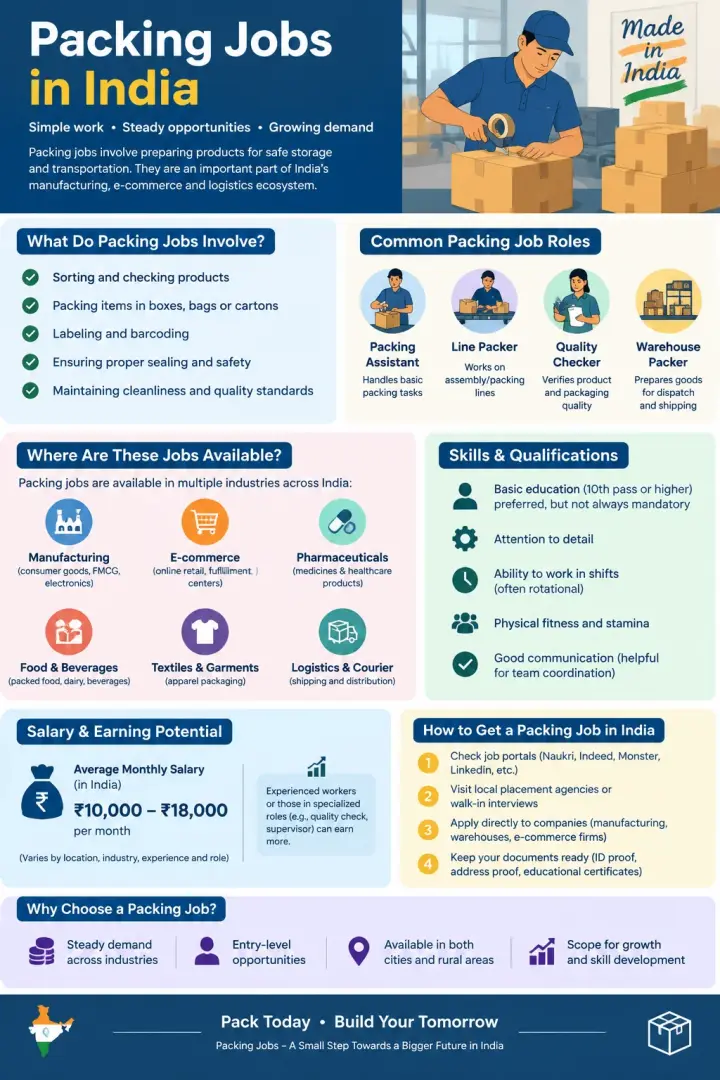
What Does a Packing Job Involve?
A packing worker prepares goods so they can be stored, transported or delivered safely. The exact tasks depend on the product. Packing clothing for an online order, for example, is different from packing food in a factory.
Common duties include:
- Picking items from shelves or receiving them from a production line.
- Checking products for visible damage or defects.
- Packing items in boxes, bags, trays or protective wrapping.
- Adding labels, barcodes, invoices or shipping details.
- Counting items and keeping basic packing records.
- Moving packed goods to a storage or dispatch area.
- Keeping the work area clean and following safety rules.
Some jobs involve standing for long periods or lifting packages. Others focus more on sorting, labelling or checking items. Always ask about the physical requirements before accepting an offer.
Types of Packing Jobs in India
Warehouse and E-commerce Packing Jobs
Warehouses pack orders for online shoppers, retailers and distributors. Workers may scan products, choose suitable packaging and prepare parcels for delivery. These jobs are often available near industrial areas and logistics hubs.
Businesses may hire extra staff during festive sales or other busy periods. A temporary role can be useful if you need short-term work, though it doesn't necessarily lead to a permanent job.
Food Packing Jobs
Food packing workers may handle snacks, spices, grains, bakery products or ready-to-eat items. Depending on the workplace, the job could include weighing portions, sealing packets and checking expiry dates.
Cleanliness matters in these roles. Employers may provide gloves, hairnets or other protective equipment and ask workers to follow hygiene procedures.
Factory and Production Packing Jobs
Factories need packers for products such as cosmetics, household goods, electrical items and textiles. Some roles are manual; others involve working alongside packing machines. Machine operator positions may require training or previous experience.
Sorting and Labelling Jobs
These jobs focus on arranging products, attaching labels or checking barcodes before dispatch. They can suit people who are comfortable with repetitive work and pay attention to small details. Basic reading skills are often useful for checking names, numbers and addresses.
Work-from-Home Packing Jobs
Some small businesses may offer genuine home-based assembly or packing work, but these openings need extra care. Fake work-from-home packing offers are common, especially ads promising high earnings for very little effort.
Before agreeing, check how materials will be supplied and collected, how completed work will be counted and when you'll be paid. Be especially cautious if someone asks for a registration fee, security deposit or payment for a starter kit.
Packing Job Salary in India
Pay varies by city, employer, shift, experience and the type of work. As a rough starting point, some entry-level packing jobs may advertise around ₹10,000 to ₹18,000 per month. Experienced workers, night-shift staff or people with machine-handling responsibilities may find higher-paying roles.
These figures are only illustrative, not guaranteed rates. A job listing may show gross pay rather than the amount you'll receive in hand. Overtime, attendance incentives and allowances may be listed separately, while applicable deductions can reduce take-home pay.
Before accepting a packing job, ask the employer:
- Is the quoted salary gross pay or take-home pay?
- How and when will wages be paid?
- Are overtime and night shifts paid separately?
- Are transport, meals or accommodation included, and are there deductions?
- Are Provident Fund and Employee State Insurance benefits applicable to the role?
It's worth comparing the offer with the applicable minimum wage for the job and location. Rates can differ by state, employment category and skill level, so check current official state government information rather than relying on an old advertisement.
Qualifications and Skills Needed
Many entry-level packing jobs don't require a college degree. Some employers may accept candidates who have completed Class 8 or Class 10, while others have different requirements. Read each listing carefully instead of assuming every packing job has the same eligibility criteria.
Useful skills include:
- Attention to detail: Checking quantities, labels and product condition.
- Basic reading and counting: Understanding instructions, item codes and order numbers.
- Time management: Completing tasks at a steady pace without ignoring quality.
- Teamwork: Coordinating with supervisors, pickers and dispatch staff.
- Physical readiness: Handling the standing, bending or lifting required for the role.
- Basic device skills: Using a barcode scanner or simple warehouse system when needed.
Don't worry if you haven't used a scanner before. Some employers train new workers on the job. Ask what training is provided and whether the training period is paid.
Where to Find Packing Jobs
Packing jobs are available across India, including around Delhi NCR, Mumbai, Bengaluru, Hyderabad, Chennai, Pune, Ahmedabad and other manufacturing or logistics centres. Openings also come up in smaller cities and towns with factories, food units and distribution facilities.
Try these places when looking for vacancies:
- National Career Service: Search the Government of India's National Career Service portal for suitable openings. Its services are free; be wary of anyone claiming a fee is needed to register or apply.
- Company career pages: Check the official websites of logistics, retail, manufacturing and e-commerce companies.
- Job portals: Search established job websites and apps using your city and preferred shift.
- Local employers: Look for vacancy notices at warehouses, industrial estates and food processing units.
- Trusted contacts: Ask friends or family about openings, but verify the details with the employer yourself.
- Employment offices and job fairs: Check local government employment offices and reputable hiring events.
Useful search phrases include “packing jobs near me”, “warehouse packing jobs in Bengaluru”, “food packing jobs in India” and “packing helper jobs for freshers”. Add your locality, shift preference or experience level to narrow the results.
How to Apply for a Packing Job
1. Make a Simple Resume
A one-page resume is usually enough for an entry-level application. Include your name, phone number, location, education, work experience and relevant skills. If you've done stock counting, delivery work, shop work or factory work, mention it. Those skills can be useful even if your previous job wasn't called a packing job.
2. Check the Job Details
Look for the employer's name, work location, duties, shift, salary and contact information. If important details are missing, ask before travelling for an interview. Confirm whether you're applying directly to the company or through a staffing agency.
3. Prepare Your Documents
An employer may ask for identity, address, bank or education documents during hiring. Carry copies if requested, but don't hand over original documents to keep. Share sensitive information only after checking that the employer and the request are genuine.
4. Ask About the Workplace
At the interview, clarify working hours, weekly rest, lifting requirements and safety arrangements. Also ask whether the job is permanent, fixed-term or contract-based. If transport is offered, check the route, timings and any cost.
5. Get the Offer Details in Writing
Before joining, ask for an appointment or offer letter with the employer's name, job location, pay and other agreed terms. Keep a copy, along with your attendance and wage records. A verbal promise is much harder to check later.
How to Spot Packing Job Scams
Honestly, a job ad that promises a very high income for a few hours of easy packing is worth questioning. Scammers may use familiar company names, copied logos or urgent messages to make an offer look real.
Watch for these warning signs:
- You're asked to pay an application, interview, registration or equipment fee.
- The recruiter guarantees a job without explaining the employer or duties.
- The salary sounds unusually high for the hours and work described.
- The contact uses a personal account and won't provide verifiable company details.
- You're pressured to send money or documents immediately.
- You're asked for an OTP, bank PIN, password or remote access to your phone.
Verify the vacancy through the company's official website or a phone number you find independently. Don't rely only on the number in the message. If you think you've encountered cyber fraud, you can report it through India's National Cyber Crime Reporting Portal or call the cybercrime helpline at 1930.
Questions to Ask Before Joining
- Who is my legal employer: the company or a staffing contractor?
- What are my daily hours, shift timings and weekly day off?
- What products will I pack, and how much lifting is involved?
- How is overtime approved and paid?
- What safety equipment and training will I receive?
- Is there a probation period or production target?
- How are wages, deductions and benefits shown on my payslip?
A genuine recruiter should be willing to explain the basics. Take a little time to understand the offer, particularly if you'll need to relocate or work a late shift.
Can Packing Jobs Lead to Career Growth?
They can. With experience, a packing worker may move into quality checking, inventory work, machine operation, dispatch coordination or team supervision. Opportunities depend on the employer and your skills, so ask about internal openings and training rather than assuming a promotion is automatic.
Learning to use scanners, maintain stock records and follow quality procedures can make your application stronger. Basic computer skills and familiarity with warehouse systems may also help if you want to move into an inventory or logistics role.
Frequently Asked Questions About Packing Jobs
Can freshers apply for packing jobs?
Yes. Many packing helper and warehouse roles accept freshers. Check the listing for education, age and physical requirements, and ask whether training is provided.
Are part-time packing jobs available?
Some employers offer part-time, seasonal or shift-based work, but availability depends on the location and business. Confirm the expected hours and pay before joining.
Do packing jobs require English?
Not every role requires spoken English. However, being able to read basic labels, numbers or instructions may be useful. Language requirements vary by employer and workplace.
Are packing jobs available for women?
Yes. Women work in packing roles across warehouses, factories and food units. Check the shift schedule, transport arrangements, facilities and workplace safety measures when considering an offer.
What should I do if a recruiter asks for money?
Pause the application and verify the employer independently. A request for a registration, security or job-confirmation payment is a major warning sign. Don't share an OTP or transfer money under pressure.
A good packing job should offer clear duties, understandable pay and a safe place to work. Compare openings, ask questions and take the time to check the employer before you join.