


Plumber Jobs in South Africa: A Practical Career Guide
Plumber jobs can be a good fit if you enjoy hands-on work, solving problems and seeing the results at the end of the day. In South Africa, plumbers work everywhere from family homes and shopping centres to construction sites, factories and municipal facilities.
The work isn't just about fixing a dripping tap. A plumber might install a geyser, trace a hidden leak, read building plans or maintain a large water system. Some jobs involve regular hours, while others come with weekend call-outs and the occasional messy emergency.
Whether you're leaving school, changing careers or already working in the trade, here's what to know about finding plumbing work in South Africa.
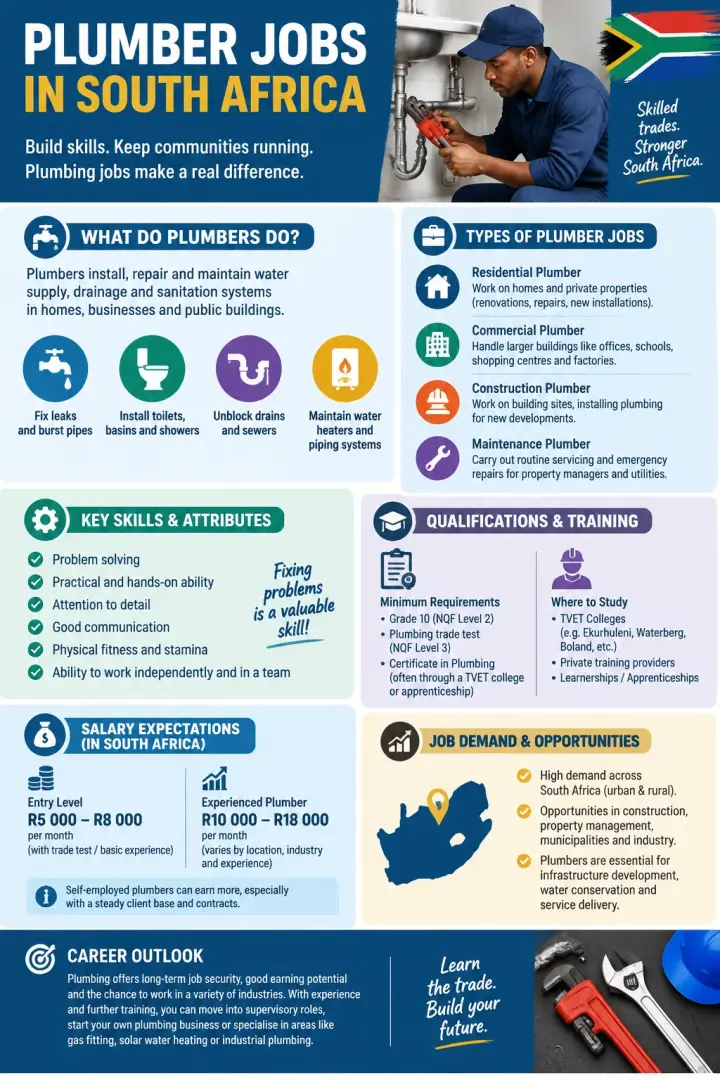
What Does a Plumber Do?
Plumbers install, maintain and repair systems that carry water and waste. The exact tasks depend on the job, the employer and the type of site.
Typical plumbing duties include:
- Installing and repairing pipes, taps, toilets, showers and other fittings.
- Finding leaks and replacing damaged pipework.
- Installing and maintaining hot-water systems, including geysers.
- Clearing blocked drains and inspecting drainage systems.
- Reading plans, measuring spaces and estimating materials.
- Testing installations and checking that work meets applicable standards.
- Explaining the problem and possible repairs to customers.
Some plumbers focus on new installations, while others spend most of their time on maintenance and repairs. You'll often work with electricians, builders, tilers and other tradespeople, so being able to communicate clearly matters more than people sometimes expect.
Types of Plumbing Jobs in South Africa
Residential plumber
Residential plumbers work in houses, flats and housing complexes. They deal with everyday problems such as leaking pipes, faulty toilets, blocked drains and geyser replacements. Good customer service is especially useful here: you're often working in someone's home, and people want to understand what's being done and what it'll cost.
Commercial and industrial plumber
Commercial plumbers work on systems in offices, hotels, schools, hospitals and other larger buildings. Industrial jobs may involve factories or facilities with more complex pipe networks. These roles can require experience with site procedures, maintenance schedules and larger teams.
Construction plumber
On a construction site, plumbers install pipework and fittings as a building takes shape. The job involves following plans, coordinating with other trades and meeting project deadlines. Work may be project-based, so it's worth asking how long a contract is expected to last.
Maintenance plumber
Maintenance plumbers look after plumbing systems in existing buildings. Employers can include property management companies, municipalities, hotels and large businesses. Along with repairs, the work may include inspections and preventative maintenance.
Apprentice or plumbing assistant
If you're new to the trade, an apprenticeship or assistant position can help you build practical skills. An apprentice typically follows a structured training pathway towards a qualification. An assistant may gain useful site experience, but the job doesn't automatically count as a formal apprenticeship, so check what training and registration are included.
How to Become a Plumber in South Africa
There's more than one route into plumbing, but becoming a qualified artisan generally involves training, practical experience and a trade test. Requirements can vary by programme and provider, so confirm the details before you enrol or accept a position.
1. Check entry requirements
Employers and training providers set their own entry requirements. Some programmes accept applicants with Grade 9, while others ask for a higher school grade or specific subjects. Maths and technical subjects can be helpful, particularly when you're working with measurements, drawings and calculations.
Contact a TVET college, accredited training provider or prospective employer to ask about the current requirements for their programme.
2. Find a recognised training opportunity
Look for a plumbing apprenticeship or an appropriate occupational training programme that combines learning with workplace experience. TVET colleges and employers may be useful starting points. Ask whether the provider and programme are properly accredited, how the practical component works and what costs you'll need to cover.
Before paying any fees, get the course details in writing. A short course can teach useful skills, but it shouldn't be confused with completing all the requirements to qualify as an artisan.
3. Build workplace experience and take a trade test
Practical experience is a big part of learning the trade. You'll need to develop skills under suitable supervision and meet the requirements of your training pathway. Once you're eligible, you can apply to take a plumbing trade test at an accredited trade test centre.
Experienced workers who haven't followed a standard apprenticeship may be able to explore recognition of prior learning or another approved route to a trade test. The requirements depend on the route, so speak to an accredited provider or trade test centre about your circumstances.
4. Check registration and certificate requirements
Qualifications aren't the only thing to consider. Some plumbing work, employers and local authorities have specific requirements around professional registration and certificates of compliance. For example, a Plumbing Industry Registration Board (PIRB) certificate of compliance must be issued by a suitably registered plumber.
Check the current rules with the relevant municipality, employer and PIRB before taking on work or promising a certificate. Requirements can depend on the installation and where the work is carried out.
Skills Employers Look For
Technical ability is important, but it's not the whole job. Employers also want people they can trust on a site and in a customer's property.
- Practical problem-solving: Finding the source of a leak isn't always as simple as looking where the water appears.
- Attention to detail: Accurate measurements and careful testing can prevent expensive rework.
- Physical fitness: The work may involve lifting, bending, digging and spending time in awkward spaces.
- Communication: You'll need to understand instructions and explain issues to colleagues or customers.
- Reliability: Arriving on time, looking after tools and following through on a job make a difference.
- Safety awareness: Plumbers encounter hot water, electricity near water, sharp tools and potentially hazardous environments.
A valid driver's licence is also useful and is often requested for jobs that involve travelling between sites. Some employers provide a vehicle; others may expect reliable transport. Check the advert rather than assuming.
How Much Do Plumbers Earn in South Africa?
Plumber salaries in South Africa vary widely. An apprentice or assistant will generally earn less than a qualified plumber, while an experienced specialist, supervisor or business owner may earn more. Location, overtime, call-outs, qualifications and the type of employer all affect the amount.
Instead of relying on one salary figure, compare recent adverts for similar jobs in your area. When an employer gives you an offer, ask about:
- Whether the amount is a monthly salary, hourly wage or project rate.
- Overtime, standby and emergency call-out pay.
- Transport, fuel, tools, protective equipment and phone allowances.
- Leave, pension or provident fund contributions, and other benefits.
- Whether the role is permanent, fixed-term or subcontracted.
If you're considering self-employment, remember that a customer's payment isn't the same as take-home pay. You may need to cover transport, insurance, equipment, materials, tax and time spent quoting or doing paperwork.
Where to Find Plumber Jobs
Start with a search for plumber vacancies in your province or city. There are opportunities in places such as Gauteng, the Western Cape and KwaZulu-Natal, but smaller towns also need plumbers for maintenance, construction and emergency repairs.
Try a mix of these approaches:
- Search established South African job sites using terms such as “qualified plumber”, “plumbing apprentice” and “maintenance plumber”.
- Check plumbing companies' websites and contact local contractors directly.
- Look at vacancies advertised by municipalities, property managers, construction firms and facilities management companies.
- Ask training providers and lecturers about workplace placements and employer contacts.
- Let people in your professional network know what kind of work you're looking for.
Don't ignore a vacancy just because the title isn't exactly “plumber”. A facilities technician or maintenance artisan role might include plumbing work, although you should read the duties and qualification requirements carefully.
How to Apply for Plumbing Vacancies
Keep your CV clear and relevant. A hiring manager should be able to see your qualifications, experience and contact details without hunting for them.
Include your trade qualification or training status, registration details if relevant, driver's licence and the types of plumbing work you've done. If you're experienced, mention the environments you've worked in, such as residential call-outs, construction sites or commercial maintenance. You can also list equipment and systems you're familiar with.
New to the trade? Include school subjects, technical training, practical projects and any work that shows you're dependable. Don't claim to be qualified or registered if you aren't. Employers can check, and being honest about your level helps them place you in the right role.
At an interview, be ready to explain how you'd approach a fault, work safely and communicate with a customer. It's also fair to ask about supervision, working hours, travel and the tools you'll be expected to bring.
Watch Out for Job Scams
Unfortunately, fake job adverts can target tradespeople as well as office workers. Be cautious if someone promises an immediate job but asks for an upfront “placement fee”, pressures you to share banking details or refuses to explain who the employer is.
Verify the company using contact details you find independently, and be careful with copies of identity documents. If a training provider asks for payment, check its accreditation and confirm exactly what the fee covers before handing over money.
Career Growth for Plumbers
Once you're qualified and have built experience, you can move in several directions. Some plumbers specialise in maintenance, commercial installations or hot-water systems. Others become team leaders, site supervisors, estimators or trainers. Starting a plumbing business is another option, though it brings responsibilities beyond the trade itself.
Keep learning as standards, products and local requirements change. Short courses can help you develop specific skills, but check whether any additional registration, authorisation or supervision is needed before offering a specialised service.
Frequently Asked Questions About Plumber Jobs
Can I become a plumber without matric?
Possibly. Some training pathways accept applicants who haven't completed matric, but entry requirements differ. Check directly with the college, training provider or employer. If you're eligible for more than one route, compare the qualification, practical training and trade test requirements before choosing.
Do I need experience to apply for a plumbing job?
Qualified plumber roles usually ask for training and practical experience. Apprenticeships and some assistant jobs are designed for people starting out, although employers may still look for basic technical ability, a willingness to learn and reliable transport.
Is a plumbing assistant the same as a qualified plumber?
No. An assistant supports plumbing work and can learn on the job, but that title doesn't mean the person has completed a trade test or holds professional registration. Ask about formal training opportunities if your goal is to qualify.
Can foreign nationals apply for plumber jobs in South Africa?
Yes, provided they have the appropriate right to work in South Africa and meet the employer's requirements. Foreign qualifications or experience may need to be assessed or recognised for a particular role. Check the current requirements with the employer and relevant South African authorities.
Is plumbing a good career in South Africa?
It can be, especially if you enjoy practical work and don't mind travelling, working in tight spaces or responding to urgent problems. Training takes commitment, but the trade offers a range of paths, from employment with a contractor to running a business. The best next step is to speak to a recognised training provider or a local employer and find out what opportunities are available near you.