

Security Guard Jobs in South Africa: What to Know Before You Apply
Security guard jobs are found across South Africa, from shopping centres and office parks to mines, warehouses and residential estates. Some positions involve checking visitors at a gate. Others include patrols, CCTV monitoring or responding to incidents.
If you're looking for work in private security, it helps to understand PSIRA registration, training grades and what employers expect. Here's a practical guide to getting started, finding vacancies and comparing job offers.
What Does a Security Guard Do?
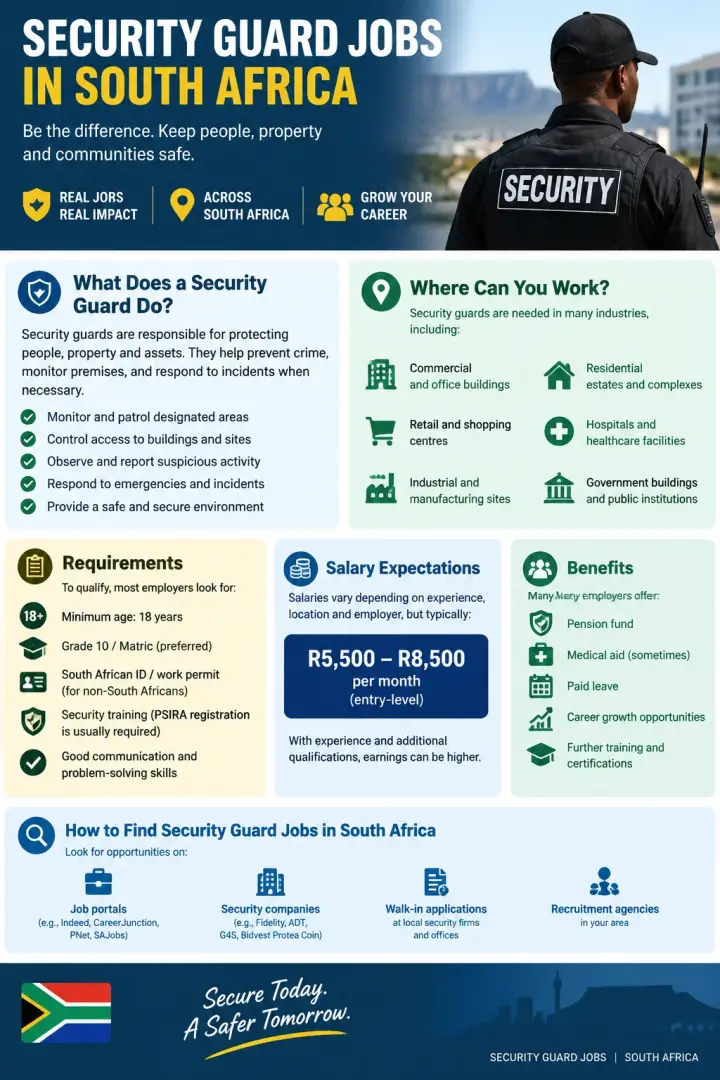
A security guard helps protect people, property and information. The exact duties depend on the site, the employer and the level of responsibility. On a typical shift, you might:
- Control access by checking identification and recording visitors.
- Patrol buildings, parking areas, fences or other assigned areas.
- Watch CCTV footage and report suspicious activity.
- Respond to alarms, incidents or requests for assistance.
- Write reports and hand over information to the next shift.
- Help enforce site rules and direct visitors.
It's not all action. Many jobs involve long periods of observation, routine checks and careful record-keeping. You'll also need to stay calm when dealing with frustrated visitors or an unexpected incident.
Where to Find Security Guard Jobs in South Africa
Security officers work in just about every province. Vacancies may be advertised by security companies, recruitment agencies or businesses hiring directly. Common workplaces include:
- Retail sites: Shopping centres, supermarkets and stores.
- Residential properties: Estates, apartment buildings and gated communities.
- Commercial sites: Offices, warehouses, factories and logistics centres.
- Public-facing facilities: Hospitals, schools, hotels and event venues.
- High-risk environments: Mines, cash-handling operations and other sites with specialised requirements.
You'll find vacancies in major centres such as Johannesburg, Pretoria, Cape Town and Durban, as well as in smaller towns. When searching, include your location and the grade you hold, for example, “Grade C security jobs in Pretoria” or “security officer jobs in Cape Town”.
Requirements for Security Guard Jobs
Requirements vary by role, but South African private security employers commonly ask for relevant training and registration with the Private Security Industry Regulatory Authority, usually called PSIRA. Always check the vacancy and current requirements with PSIRA before paying for training or submitting an application.
PSIRA registration
PSIRA regulates the private security industry in South Africa. For many security officer roles, employers ask for proof that you're registered and that your details are current. You can check the registration process, required documents and applicable fees through PSIRA's official channels.
Eligibility requirements include being at least 18 years old and meeting applicable legal and background requirements. Your right to work and your immigration or residence status may also matter. Requirements can change, so check your own circumstances with PSIRA rather than relying on an old job advert.
Security training grades
Security training is commonly described using grades E to A. The duties associated with each grade can overlap, and a job advert should explain the level it needs. As a general guide:
- Grade E: Entry-level duties, often involving basic access control.
- Grade D: Access control, patrolling and other guarding duties.
- Grade C: Broader security duties, sometimes including responsibility for a site or other officers.
- Grade B: More advanced supervisory duties.
- Grade A: Senior security management and operational responsibilities.
Before enrolling, confirm that the training provider is appropriately accredited and that the course meets current PSIRA requirements. Ask for the full cost, what's included and which documents you'll receive. Completing a course isn't the same thing as completing PSIRA registration.
Other common requirements
Depending on the vacancy, an employer may ask for a matric certificate, previous experience, a driver's licence or computer skills. Some roles require shift work, physical fitness or the ability to stand for long periods. Employers may also conduct reference and background checks.
A criminal record doesn't necessarily answer every eligibility question on its own; the nature of an offence and the applicable rules matter. If you're unsure, contact PSIRA directly before spending money on a course.
Armed and Unarmed Security Jobs
Many security guard positions are unarmed. Armed roles have additional legal and training requirements and shouldn't be treated as an automatic next step after basic security training.
If a job involves carrying a firearm, ask the employer exactly what competency, training and authorisation are required. Firearm possession and use must comply with South African law, including the Firearms Control Act. Don't assume that a security training certificate alone allows you to carry a firearm.
How Much Do Security Guards Earn in South Africa?
Security guard pay varies by grade, location, employer, hours and the type of site. An experienced supervisor or someone in a specialised role may earn more than an entry-level guard, but job titles alone don't tell the full story.
Private security wages are subject to applicable sectoral rules and minimum rates, which can change. The rate that applies may depend on factors such as your grade and area. Check the latest official information from the Department of Employment and Labour, and compare it with the details in your offer.
Honestly, a monthly figure in an advert can be misleading if it doesn't explain the hours. Before accepting, ask:
- Is the amount a basic salary, an hourly rate or an estimate including overtime?
- How many ordinary hours and shifts are expected?
- How are overtime, Sundays and public holidays handled?
- Are there lawful deductions, and what are they for?
- Are benefits or provident fund contributions included or required?
- Will I receive a written contract and payslips?
Keep copies of your contract, payslips and shift records. If you think your pay or working conditions don't comply with the law, contact the Department of Employment and Labour or seek advice from a relevant union or labour adviser.
Skills Employers Look For
A PSIRA registration and the right grade can get your application considered, but employers also want people they can trust to handle a site responsibly. Useful skills include:
- Observation: Noticing changes, risks and unusual behaviour without jumping to conclusions.
- Communication: Giving clear instructions and speaking respectfully to visitors and colleagues.
- Report writing: Recording what happened accurately, including times and relevant details.
- Reliability: Arriving on time and following shift handover procedures.
- Conflict management: Staying calm and seeking assistance when a situation escalates.
- Basic technology: Using access systems, radios, computers or CCTV equipment where required.
Language skills can be useful, especially on busy sites. If you speak more than one South African language, include that on your CV along with the level you're comfortable using at work.
How to Apply for Security Guard Jobs
1. Get your documents ready
Keep clear, up-to-date copies of the documents requested in the advert. These may include your ID or other relevant identification, proof of PSIRA registration, training certificates, CV and references. Don't send sensitive documents to an unverified person just because they ask for them.
2. Write a straightforward security CV
Put your contact details, location, PSIRA grade and registration status near the top. Follow with your work history, training and relevant skills. For each previous role, mention the type of site and a few duties, such as access control, patrols or incident reporting.
If you don't have security experience yet, include other work that shows reliability and communication. Retail, reception, warehouse or volunteer experience may be relevant. Be honest about your skills and qualifications; employers can check them.
3. Search through reliable channels
Look at established job boards, security company websites and verified company social media pages. You can also ask reputable local security companies how they accept applications. Tailor your search by grade and area, and check whether the advert has a closing date.
4. Prepare for the interview
Expect questions about shift availability, past duties and how you'd handle an incident. For example, an interviewer may ask what you'd do if a visitor refused to sign in. A good answer should show that you can follow site procedures, communicate calmly and call a supervisor or the appropriate authorities when needed.
Take your requested documents, arrive early and ask questions of your own. It's reasonable to ask where you'll be posted, who your employer will be and how the shift roster works.
How to Avoid Security Job Scams
Job seekers are often targeted with fake vacancies, especially when an advert promises an immediate start or an unusually high salary. Take your time and verify the offer before sharing documents or making any payment.
- Be wary of anyone who asks for a recruitment fee or payment to secure a job.
- Check the company using independently sourced contact details, not only the number in a message.
- Be cautious if the recruiter uses a personal account and won't provide a verifiable company address.
- Don't share banking details or copies of identity documents until you've checked who is receiving them and why.
- Read the contract carefully and question promises that aren't included in writing.
There may be legitimate costs associated with recognised training or registration. That's different from paying someone who promises to guarantee you a vacancy. Verify the provider, process and fees through official channels first.
Can You Get a Security Job Without Experience?
Yes, some employers advertise entry-level security jobs. You'll still need to meet the registration, training and other requirements for the position. Focus on vacancies that state they're open to new applicants, and show that you're dependable, willing to learn and available for the required shifts.
Don't overlook the practical costs of a new job. Transport for early morning or late-night shifts can be difficult, so check the location and roster before accepting an offer.
Growing Your Security Career
Once you have experience, you may want to move into a different site or work towards a supervisory grade. Depending on your interests and the employer's requirements, you could explore CCTV operations, control room work, investigations, safety-related duties or security management.
Keep a record of your training and ask experienced supervisors what skills are valued at your workplace. Before paying for another course, check that it's recognised and useful for the role you want.
Frequently Asked Questions
Do I need PSIRA registration to work as a security guard?
Registration is generally required for private security service providers, including security officers. Check current requirements and your individual eligibility directly with PSIRA.
Can I apply for a security job without matric?
Some vacancies may not require matric, while others do. Read each advert carefully and check the training and registration requirements separately.
Are security guard jobs available on weekends?
Yes. Many sites need security coverage every day, so weekend, night and public holiday shifts are common. Ask about the roster and applicable pay before accepting a position.
What's the best way to find a legitimate vacancy?
Start with established job sites and verified security company channels. Check the employer independently, read the job requirements carefully and avoid anyone demanding payment in exchange for a guaranteed job.
Security work can offer a route into a range of roles, but the right opportunity is one that fits your qualifications and circumstances. Check your registration, compare the full employment terms and take the time to verify the employer before you commit.