

Packing Jobs in Singapore: What to Expect and How to Apply
Looking for a packing job in Singapore? You’ll find opportunities in warehouses, factories, food production facilities and online retail businesses. Some roles are open to people with little or no experience, while others call for skills such as inventory tracking or operating packing equipment.
Honestly, the job title doesn’t always tell you the whole story. One packer might prepare small online orders at a table, while another spends a shift moving cartons around a warehouse. Before applying, it’s worth checking the duties, location, hours and pay arrangement so you know what you’re signing up for.
What Does a Packer Do?
A packer prepares products for storage, delivery or sale. The work often involves following a checklist, checking items for damage and making sure each order has the right label.
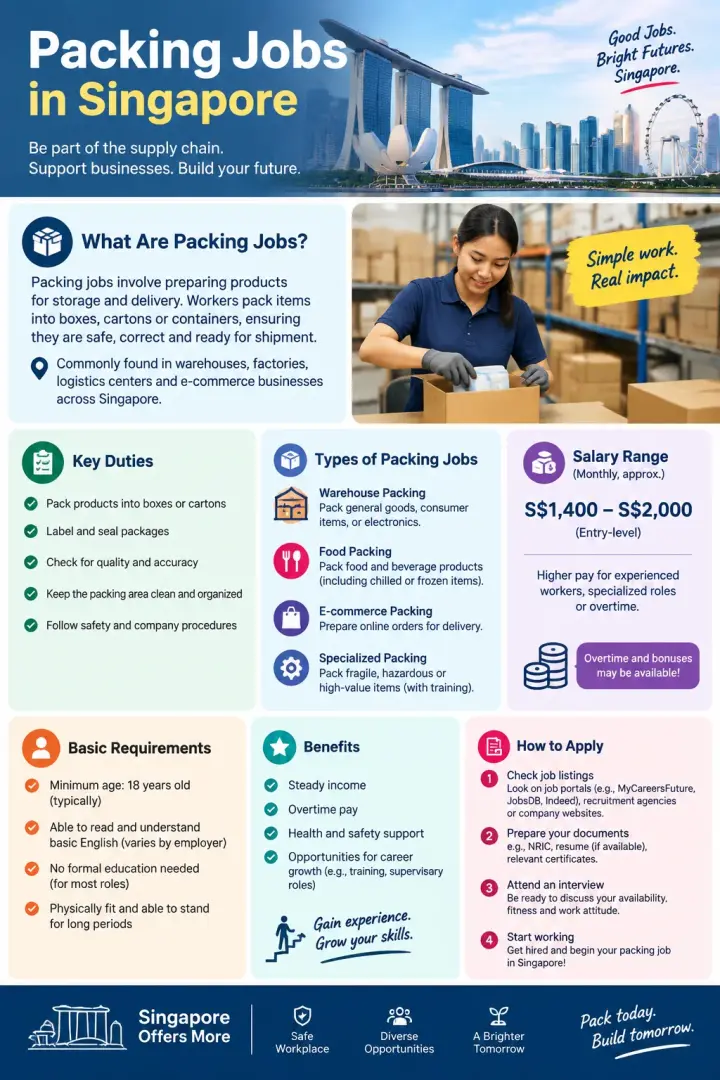
Depending on the employer, your daily tasks might include:
- Picking items from shelves using an order list or scanner
- Counting products and checking quantities
- Wrapping, sealing and labelling packages
- Inspecting goods for damage or missing parts
- Sorting parcels by destination or delivery route
- Updating stock records or using a barcode scanner
- Keeping the packing area clean and organised
- Following food hygiene or workplace safety procedures
Some jobs are mostly seated or involve lightweight products. Others require standing for long periods, lifting cartons or working in chilled rooms. Read the description carefully and ask about physical requirements before accepting an offer.
Types of Packing Jobs in Singapore
Warehouse and logistics packing
Warehouse packers prepare goods for storage and delivery. You might pick products from shelves, scan barcodes, pack orders and help with stock counts. These roles are often available in industrial and logistics areas such as Jurong, Tuas and Changi.
Check the exact worksite and transport options. A job listed as being in the west, for example, could still involve a long bus journey from the nearest MRT station. Some employers provide transport from selected pickup points, but it’s best to confirm.
E-commerce packing
Online retailers and fulfilment companies need people to prepare customer orders. The work can include checking order details, adding protective packaging, printing labels and sorting parcels for collection.
Expect busy periods around major sales events and festive seasons. These can be good times to look for temporary packing jobs, although shifts and workloads may change quickly.
Food packing
Food packers portion, seal, label or box products for sale and distribution. Employers may require hairnets, gloves, uniforms or other protective equipment. Some roles involve refrigerated environments, early starts or standing for most of the shift.
Hygiene matters here. Ask whether training is provided and whether the role requires any specific food safety certification.
Factory and production packing
In a production facility, packers may work at the end of an assembly or manufacturing line. Duties can include visual checks, operating simple equipment and preparing finished products for shipment.
These jobs can be repetitive and may follow fixed production targets. If you’re considering one, ask how targets are measured and what training new staff receive.
Part-time and temporary packing
Part-time, contract and seasonal roles can suit students, people between jobs or anyone who needs a shorter commitment. Some employers offer weekday, weekend or evening shifts, while others need staff during peak sales periods.
Flexibility varies. A part-time listing might still require a minimum number of shifts or availability on particular days, so check the schedule before applying.
How Much Do Packing Jobs Pay in Singapore?
Pay varies by employer, industry, shift pattern and experience. A full-time packer may be offered a monthly salary, while part-time and temporary workers are often quoted an hourly or daily rate. Night shifts, overtime or specialised duties may come with additional pay, but don’t assume allowances are included.
When comparing offers, look beyond the headline number. Check:
- Whether the amount is basic pay or includes allowances and overtime
- The number of working days and hours expected
- Whether breaks are paid or unpaid
- How overtime, rest days and public holidays are handled
- Whether transport or meals are provided or deducted
- When you’ll be paid and how your pay is calculated
For example, if a hypothetical role pays $12 an hour for 40 paid hours a week, that’s $480 before any applicable deductions or additional payments. Your actual earnings depend on the agreed hours and terms. A higher hourly rate isn’t always the better deal if shifts are irregular or transport costs are high.
Requirements and Skills Employers Look For
Many entry-level packing jobs provide on-the-job training. You may not need a specialised qualification, but employers usually want someone who can follow instructions, work reliably and pay attention to detail.
Useful skills include:
- Basic counting and checking skills
- Care when handling fragile or perishable items
- Ability to follow packing and safety instructions
- Time management during busy periods
- Comfort using a scanner or simple stock system
- Teamwork and clear communication
Some roles also have language, shift availability or physical requirements. These should relate to the job. If a listing mentions lifting, ask about typical package weights and whether trolleys or lifting equipment are available.
Where to Find Packing Jobs in Singapore
Start with established job platforms and employer websites. Search for terms such as “packer jobs Singapore”, “warehouse assistant”, “food packer”, “fulfilment assistant” or “part-time packing jobs”. You can also add your preferred area or shift, such as “Jurong” or “night shift”.
Places to look include:
- MyCareersFuture and other Singapore job portals
- Company career pages for retailers, manufacturers and logistics firms
- JobStreet and FastJobs listings
- Licensed employment agencies
- Local job fairs and community hiring events
Check when a listing was posted and whether the company name and work location are clear. If you’re applying through an agency, you can check its licence using the Ministry of Manpower’s Employment Agencies Directory.
How to Apply for a Packer Job
1. Prepare a simple resume
Keep your resume clear and relevant. Include your contact details, availability, previous work experience and any useful skills. Experience in retail, food service, stock handling or delivery can be relevant, even if you’ve never worked as a packer.
If you’re new to work, mention practical strengths such as being comfortable with shift work, following instructions or handling repetitive tasks. Only list skills and experience you genuinely have.
2. Check the job details
Before sending an application, make sure the location and schedule are realistic for you. A night shift may sound convenient until you check how you’ll get home after public transport stops running.
Look for the type of contract, expected hours, salary or rate, main duties and contact details. If something is missing, ask the employer or recruiter before committing.
3. Get ready for the interview
Interviews for packing roles are often straightforward. You might be asked about your availability, previous experience, ability to work on your feet and familiarity with warehouse or hygiene procedures.
Be honest about your limits and ask questions of your own. A good fit matters to both you and the employer.
Questions to Ask Before Accepting an Offer
- What products will I be packing, and what does a typical shift involve?
- What are the working hours, rest days and break times?
- Is the advertised pay basic salary, or does it include overtime and allowances?
- How often are overtime and weekend shifts required?
- Where exactly is the worksite, and is transport provided?
- What are the lifting requirements and safety arrangements?
- Will I receive training, protective equipment and a written contract?
- Who is my employer if I’m hired through an agency?
It’s worth getting the main terms in writing. Keep a copy of your contract, payslips and any agreed changes to your schedule or pay.
Employment Terms and Eligibility
Employment conditions depend on your contract and the laws that apply to your situation. Singapore’s Ministry of Manpower, or MOM, provides guidance on employment contracts, salary payments, working hours and leave. Some protections, including certain overtime and working-hour provisions, have specific eligibility rules.
Singapore citizens and permanent residents may be eligible for CPF contributions, subject to the applicable rules. If you’re unsure how a term applies to you, check MOM or CPF Board guidance rather than relying only on a verbal explanation.
Foreign candidates must have a valid work pass that allows them to work for the relevant employer. Employers are responsible for applying for the appropriate pass, and eligibility depends on the job, sector and other requirements. Don’t start work on a visit pass or assume a job offer guarantees work pass approval. Check the latest requirements on the MOM website.
How to Avoid Packing Job Scams
Be cautious if an offer promises unusually high pay for very little work, pressures you to start immediately or asks you to transfer money before you receive a proper offer. A legitimate-looking message or logo alone isn’t proof that a recruiter represents a company.
Before sharing sensitive information or making any payment:
- Verify the company and contact it through an official channel.
- Check an employment agency’s licence in MOM’s directory.
- Ask for clear details about the employer, worksite, duties and pay.
- Don’t share banking passwords, one-time passwords or Singpass credentials.
- Be wary of requests to pay for a job, training or equipment upfront.
If something feels off, pause and verify it independently. You can also check ScamShield for guidance and report suspected scams to the relevant authorities.
Can a Packing Job Lead to Other Opportunities?
It can. A packing role may help you build experience in stock control, order fulfilment, quality checking or warehouse operations. With training and experience, some workers move into inventory, team leader or logistics coordinator roles. Progression depends on the employer and the skills the next job requires, so ask about training and internal vacancies if that’s important to you.
Frequently Asked Questions
Can I get a packing job without experience?
Yes, some entry-level roles accept applicants without previous packing experience and provide training. Employers may still expect you to meet shift, safety and physical requirements.
Are there part-time packing jobs in Singapore?
Yes. Part-time and temporary roles are advertised by warehouses, retailers, food businesses and agencies. Hours and minimum shift requirements vary, so confirm them before accepting.
Do packing jobs always involve heavy lifting?
No. Some involve small, lightweight items, while others require moving heavier cartons. Ask about typical weights, how often lifting is needed and what equipment is available.
Are packing jobs suitable for students?
Some part-time or seasonal roles may fit around study schedules. Check the shift requirements, your eligibility to work and whether the commute is manageable alongside your classes.
A packing job can be a practical way to earn income or get started in logistics and operations. Take your time comparing the actual duties and terms, not just the advertised pay. The best role is one that fits your schedule, abilities and travel plans.