

Driver Jobs in Singapore: A Practical Guide to Finding the Right Role
Driver jobs in Singapore come in more varieties than you might expect. You could deliver parcels around your neighbourhood, transport passengers, drive a company vehicle or handle heavy goods between warehouses and customer sites.
Some roles offer regular weekday hours. Others involve early starts, night shifts or weekend work. Pay can look quite different too, depending on the vehicle, your licence, the number of trips and whether expenses come out of your earnings.
If you're looking for a driving job in Singapore, this guide covers the common roles, licence requirements, salary factors and questions worth asking before you accept an offer.
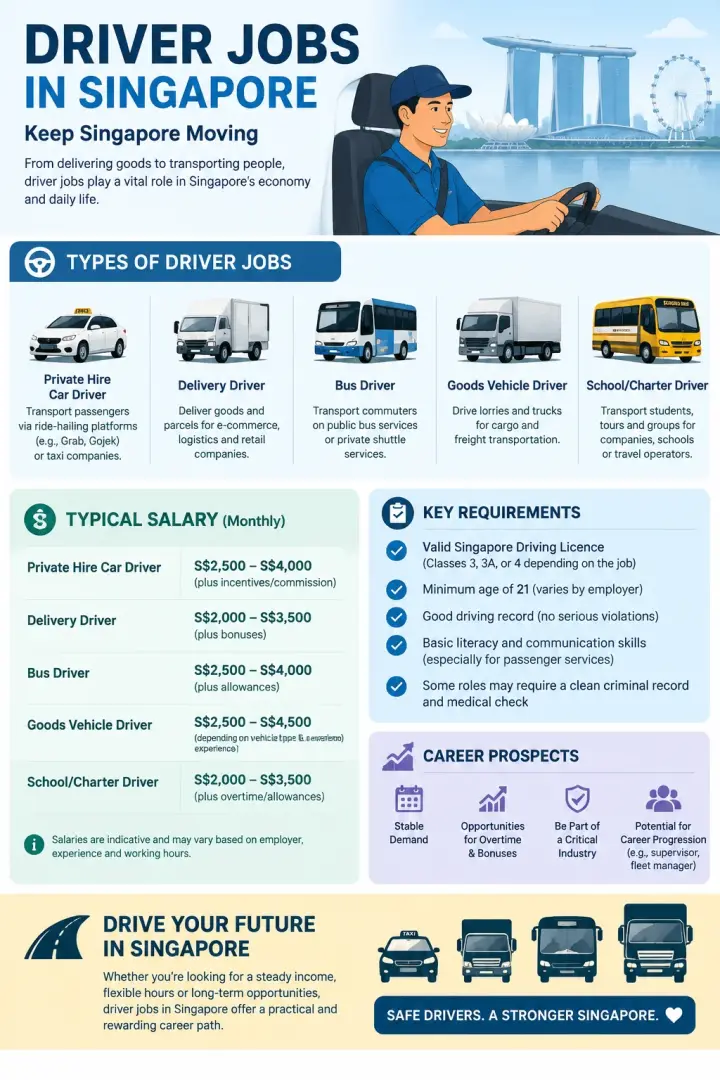
Types of Driver Jobs in Singapore
The best driving job isn't necessarily the one with the highest advertised pay. It's the one that fits your licence, schedule and comfort level on the road.
Delivery Driver
Delivery drivers transport parcels, food, groceries, documents or business supplies. Depending on the employer, you might drive a van, car or lorry. Some jobs follow a fixed route, while others involve changing delivery locations throughout the day.
Expect more than just driving. You may need to load goods, scan parcels, collect signatures and contact customers. Check whether the company provides a vehicle and pays for fuel, parking and Electronic Road Pricing, or ERP, charges.
Company or Personal Driver
A company driver may transport staff, clients or documents between offices and appointments. Personal drivers usually work for an individual or household and may also help with errands or vehicle upkeep.
These roles often call for punctuality, discretion and a tidy vehicle. Working hours can vary, especially if the employer needs transport in the evenings or on weekends.
Bus Driver
Bus drivers may work on public bus services, private charters, school routes or employee transport. You'll need the appropriate driving licence and vocational licence for the service you're operating.
It's a people-facing role as well as a driving job. Employers may look for patience, safe driving habits and the ability to assist passengers. Shift work is common, so check the roster before applying.
Lorry or Heavy Vehicle Driver
Lorry drivers move goods for logistics companies, construction businesses, suppliers and other employers. Some routes involve deliveries across Singapore; others may be linked to ports, warehouses or project sites.
Depending on the vehicle, you'll need a Class 3, 4 or 5 licence. The job may include loading and unloading, securing cargo and checking delivery paperwork. Ask whether an assistant is provided if the goods are heavy.
Taxi or Private-Hire Driver
Taxi and private-hire drivers transport passengers for fares. The schedule can be more flexible than a fixed-shift job, but earnings depend on demand, working hours, operating costs and other factors.
Taxi drivers need a Taxi Driver's Vocational Licence, while private-hire car drivers need a Private Hire Car Driver's Vocational Licence. LTA sets eligibility and training requirements, so check its latest guidance before spending money on courses or a vehicle.
Motorcycle Delivery Rider
If you prefer riding to driving a car or van, food and parcel delivery may be an option. You'll need a valid motorcycle licence for the bike you use, along with the required insurance and permissions.
Consider the practical side too: Singapore's rain and heat, parking, phone navigation and the physical demands of being on the road for hours. Platform work can be flexible, but your take-home earnings may change from week to week.
Driving Licence Requirements in Singapore
Your licence needs to match the vehicle and the work. Here are the common categories you'll see in Singapore driver job advertisements:
Class 3: For eligible cars and light goods vehicles with manual or automatic transmission.
Class 3A: For eligible automatic-transmission cars and light goods vehicles. It doesn't cover manual vehicles.
Class 4: For eligible heavy motor vehicles, including certain lorries and buses.
Class 5: For eligible heavy motor vehicles in the Class 5 category.
Motorcycle licences: Classes 2B, 2A and 2 cover different motorcycle categories.
Always check the exact vehicle category and any additional requirements with the Singapore Police Force's Traffic Police and the employer. A driving licence alone may not be enough for passenger services that also require a vocational licence.
If you hold a foreign driving licence, don't assume it's valid for every job or for your entire stay. Check the current rules on driving and licence conversion with Traffic Police before applying.
How Much Do Driver Jobs Pay in Singapore?
Driver salaries vary widely. A full-time role may advertise a fixed monthly salary, while another may combine basic pay with overtime, trip allowances, incentives or commission. Platform earnings can fluctuate even more.
Rather than relying on a single salary figure, compare current listings for the same type of role and licence class. Job portals such as MyCareersFuture, Jobstreet, Indeed and FastJobs can give you a useful picture of what employers are offering.
Look closely at what makes up the advertised amount:
Is the figure basic salary or a total that assumes overtime and incentives?
How many hours and days must you work to earn it?
Are fuel, parking, ERP, vehicle rental and maintenance covered?
Are there additional payments for public holidays, night work or extra trips?
Is the income steady, or does it depend heavily on demand and completed jobs?
Honestly, a higher headline number isn't always the better deal. A job with a lower advertised figure but a company vehicle and predictable hours may leave you better off than one with high operating costs.
Full-Time, Part-Time or Platform Driving?
A full-time employed position can suit you if you want a regular roster and a clearer monthly income. Part-time work may be useful if you have other commitments, though available shifts and benefits vary by employer.
Platform driving or delivery can offer flexibility, but you'll need to budget for downtime and expenses. Platform workers in Singapore have specific protections and contribution rules; check the Ministry of Manpower and CPF Board websites for the latest details and how they apply to you.
For employed roles, ask for the key employment terms in writing. These should make it easier to understand your working hours, salary and other conditions. Eligible Singapore citizens and permanent residents in employment generally receive CPF contributions, subject to the applicable rules.
What Employers Look for in a Driver
A valid licence gets you through the first door, but employers also want someone they can trust with their vehicle, customers and goods. Common requirements include:
A driving licence that matches the vehicle used for the job.
Safe driving habits and a suitable driving record.
Reliability, punctuality and basic route-planning skills.
Comfort using navigation or delivery apps.
Clear communication with customers, dispatchers or passengers.
Willingness to handle loading, paperwork or shifts where the role requires it.
Some employers prefer previous experience, but entry-level roles are available too. If you're new, highlight related skills such as customer service, warehouse work or familiarity with delivery apps. Don't claim experience you don't have.
Where to Find Driver Jobs in Singapore
Start with a focused search. Terms such as “Class 3 driver jobs Singapore”, “lorry driver jobs”, “part-time delivery driver” and “bus driver jobs” can help you narrow the results.
Try these places:
Job portals: Search MyCareersFuture, Jobstreet, Indeed and FastJobs, then filter by location, salary and employment type.
Company websites: Logistics firms, retailers, transport operators and delivery companies often list vacancies directly.
Recruitment agencies: Agencies may help match candidates with employers, especially for logistics and transport roles.
Personal networks: Friends and former colleagues may know of openings, but still check the terms with the employer yourself.
Save a few searches and check them regularly. Vacancies can fill quickly, particularly when a company needs a driver immediately.
How to Apply for a Driver Job
Keep your application straightforward. Employers need to see quickly whether you have the right licence and availability.
1. Update Your Resume
Include your contact details, relevant licence classes, vocational licences if applicable, and previous driving or delivery experience. Mention the types of vehicles you've driven and any useful work skills, such as handling delivery documents or using route apps.
2. Check the Job Details
Read the listing for the vehicle type, shift pattern, reporting location and physical requirements. A delivery job based far from home with a very early start may be harder to sustain than it first appears.
3. Prepare for the Interview
Be ready to explain your driving experience, availability and how you handle delays or difficult customers. Some employers may ask you to take a practical driving assessment. Bring the documents they request and check that your licences are valid.
4. Review the Offer
Before accepting, confirm the salary structure, rest days, overtime arrangements and who pays for vehicle-related expenses. If a recruiter makes a promise verbally, ask for it to be reflected in the written offer.
Questions to Ask Before Accepting a Driving Job
I'd keep a short list handy for the interview. These questions can help uncover details that aren't always clear in an advertisement:
What vehicle will I drive, and is it provided by the company?
What are the usual working hours, routes and number of stops?
Will I need to load or unload goods on my own?
How are overtime, allowances and incentives calculated?
Who covers fuel, ERP, parking, maintenance and insurance?
What happens if a delivery is delayed or the vehicle breaks down?
Are training and any required licences paid for by the employer?
Work Passes and Job Scams: What to Check
If you're a foreign applicant, make sure the employer can legally hire you for the specific role. Work pass conditions matter, and restrictions can apply to the occupation and employer. Check the Ministry of Manpower's current rules rather than relying only on a job advertisement.
Be careful with offers that promise unusually high earnings but give few details. Verify the company and recruiter, ask for written terms, and be wary of anyone asking for upfront payments or sensitive financial information before you've confirmed the opportunity is legitimate. You can check employment agency information through MOM.
Frequently Asked Questions
Can I get a driver job in Singapore with no experience?
Yes, some employers hire entry-level drivers and provide on-the-job training. You'll still need the correct licence and must meet the role's other requirements. Delivery assistant or junior driver positions may be worth considering while you build experience.
Can I use a Class 3A licence for delivery jobs?
Some delivery jobs accept Class 3A, provided the vehicle is automatic and falls within the licence category. Check the listing or ask the employer, because a role involving a manual vehicle requires the appropriate licence.
Do I need my own vehicle for a delivery driver job?
Not always. Some employers provide a van or other vehicle, while others expect you to use or rent one. Confirm who pays for operating costs before comparing offers.
Is a vocational licence required for private-hire driving?
Yes. Private-hire car drivers need the appropriate vocational licence and must meet LTA's requirements. Check the latest eligibility, training and application details directly with LTA.
Finding a Driver Job That Works for You
There are plenty of routes into driving work in Singapore, whether you're interested in parcels, passengers or heavy vehicles. Start with jobs that match your licence, compare the full terms rather than salary alone, and ask practical questions about the day-to-day work.
A little checking upfront can make a big difference. The right job should work for your schedule and budget as well as your driving skills.