

Cleaning staff jobs are found in almost every part of New Zealand, from central Auckland offices to motels in small towns. They can suit people looking for full-time work, an early-morning shift, a second job or a way to build local work experience.
You don’t always need a formal qualification to get started. Employers often care more about reliability, attention to detail and a willingness to follow instructions. Some specialist roles do need experience or extra training, particularly when chemicals, machinery or healthcare settings are involved.
Here’s what cleaning work can look like in New Zealand, where to find vacancies and what to check before accepting a job.
What do cleaning staff do?
Cleaning staff help keep buildings safe, tidy and pleasant to use. The exact work depends on the workplace. A hotel housekeeper might spend most of the day preparing guest rooms, while an office cleaner may work after hours, emptying bins and cleaning shared spaces.
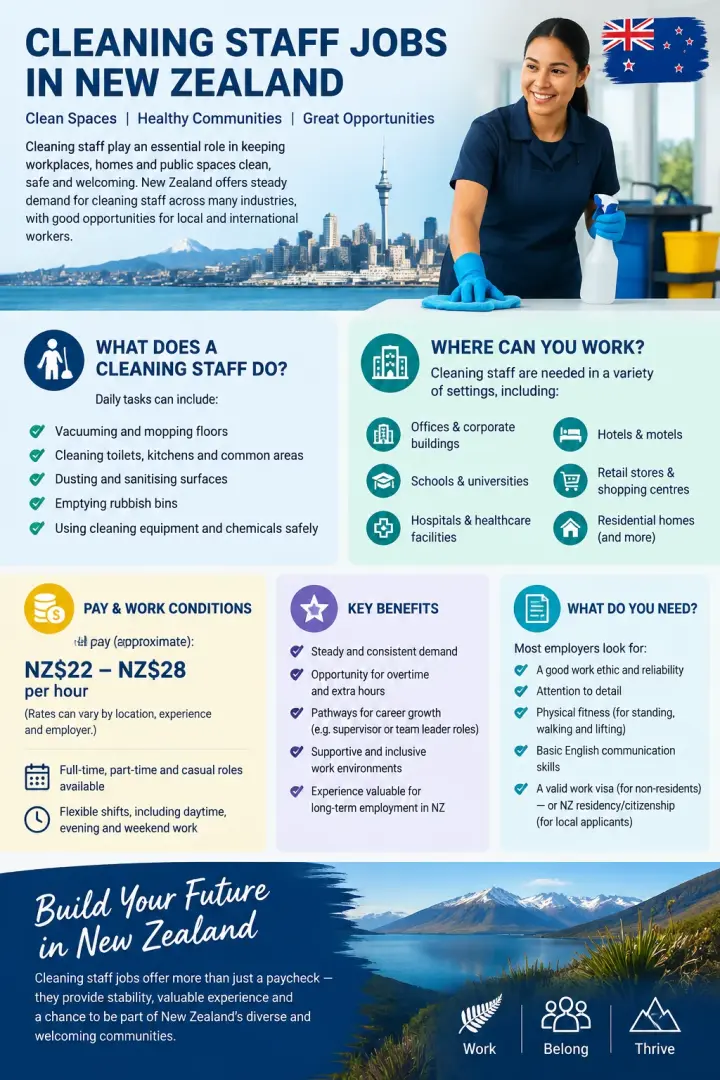
Common cleaning duties include:
- Vacuuming carpets and mopping hard floors
- Cleaning bathrooms, kitchens and other shared areas
- Wiping surfaces and disinfecting high-touch points
- Emptying rubbish and sorting recycling
- Restocking soap, paper towels and other supplies
- Changing bed linen and preparing rooms for guests
- Reporting damaged equipment or maintenance issues
- Using cleaning products and equipment safely
Some positions involve working alone across several sites. Others are part of a larger team with a supervisor and a set daily schedule. Either way, the work can be physical, with plenty of standing, walking, bending and lifting.
Types of cleaning jobs in New Zealand
Office and commercial cleaning
Commercial cleaners work in offices, shops, warehouses and other business premises. Shifts are often scheduled before staff arrive or after they leave, so early mornings and evenings are common. You might clean desks, floors, kitchens and toilets, as well as empty bins and restock supplies.
This type of role can be a good fit if you prefer a predictable routine or want hours outside a typical working day. Check whether you’ll work at one location or travel between sites.
Hotel and motel housekeeping
Housekeepers clean guest rooms, make beds, replace towels and prepare rooms for new arrivals. There may also be public areas and laundry to look after. Hotels and motels often need staff on weekends and public holidays, especially during busy travel periods.
Speed matters, but so does quality. Employers usually expect rooms to meet a consistent standard, and staff need to report anything missing, damaged or left behind by guests.
School and childcare cleaning
Cleaning work in schools and early childhood centres often takes place after children have gone home. Duties can include cleaning classrooms, toilets, play areas and shared equipment.
Some employers may require a police check or other screening, depending on the role and workplace. Job advertisements should explain what’s needed.
Hospital and healthcare cleaning
Healthcare cleaners work in places where careful hygiene procedures are especially important. Depending on the role, you could clean patient rooms, waiting areas, bathrooms or equipment surfaces.
Employers may provide training in infection prevention, protective equipment and the safe handling of waste. You’ll need to follow site procedures closely rather than relying on the cleaning methods you use at home.
Residential cleaning
Residential cleaners help maintain private homes. The work might include bathrooms, kitchens, floors, dusting and changing linen. Some clients book a regular weekly clean, while others need a one-off clean before moving.
These roles may involve travelling between homes, so a driver licence and access to transport can be useful. It’s worth asking whether travel time, mileage or supplies are covered.
Specialist and industrial cleaning
Specialist cleaners may work on carpets, windows, construction sites, factory floors or other areas that need particular equipment and safety procedures. Some jobs involve heights, heavy machinery or hazardous substances and may require specific training or certification.
If you’re interested in moving into this area, an entry-level commercial cleaning role can be a useful place to start building experience.
Skills employers look for
A cleaning job doesn’t necessarily require years of experience, but employers still want to know you can do the work safely and consistently. Useful skills include:
- Reliability: Arriving on time and completing the agreed shift.
- Attention to detail: Noticing marks, missed areas and supplies that need replacing.
- Time management: Working through a checklist without rushing past important tasks.
- Communication: Understanding instructions and letting a supervisor know when there’s a problem.
- Physical fitness: Being comfortable with the movement and lifting the job involves.
- Safety awareness: Following product labels, site rules and equipment instructions.
- Trustworthiness: Respecting clients’ property, privacy and workplace security.
Honestly, a clear example can be more persuasive than a long list of qualities. If you’ve cleaned at a previous job, helped prepare a community venue or kept shared spaces tidy, explain what you did and how you organised the work.
Do you need qualifications or experience?
Many entry-level cleaning staff jobs in New Zealand offer training on the job. Employers may show you how to use their products, follow a cleaning schedule and operate equipment. A good attitude and the ability to learn can matter as much as formal experience.
That said, requirements vary. A healthcare or specialist cleaning employer may ask for relevant experience, a background check or training. A role covering multiple sites might require a full driver licence. Some employers also look for basic English communication so staff can understand instructions and raise safety concerns.
Training in areas such as health and safety, infection control or equipment use can help your application, but check what the employer actually requires before paying for a course.
Cleaning staff pay and working hours
Pay varies by employer, location, experience and the type of cleaning. Specialist work, supervisory duties, unsociable hours and collective employment agreements may affect the rate. Advertisements may show an hourly rate or ask applicants to discuss pay during the hiring process.
New Zealand’s minimum wage rates can change, so check the current rate that applies to you on the Employment New Zealand website. Before accepting an offer, ask whether the advertised amount is an hourly rate before tax and whether any allowances apply.
Cleaning shifts can be full-time, part-time, casual or fixed-term. Some are only a few hours a day; others cover a full shift. Weekend, evening and early-morning work is common, particularly in hospitality and commercial buildings.
Also check whether the hours in the job advertisement are guaranteed. A role advertised as flexible may still have set availability requirements, and a casual role may not provide the same predictable hours as a permanent position.
Where to find cleaning jobs in New Zealand
Start with the major job websites, then look locally. Smaller businesses don’t always advertise in the same places as large cleaning companies.
- Search SEEK and Trade Me Jobs using terms such as “cleaner”, “housekeeper”, “commercial cleaner” and “cleaning assistant”.
- Check the career pages of hotels, cleaning companies, healthcare organisations and schools.
- Look at local community job boards and council or community noticeboards.
- Ask Work and Income about suitable vacancies or employment support if you’re eligible.
- Contact cleaning companies directly with a short introduction and your CV.
- Let people in your network know what hours and locations you’re available for.
Try adding a location to your search, such as “cleaning jobs Christchurch” or “hotel housekeeping Queenstown”. If you’re open to several shift types, search for each one separately. A job listed as “room attendant” might not appear when you search only for “cleaner”.
How to write a CV for a cleaning job
Keep your CV clear and easy to scan. Include your contact details, a short summary, relevant work history and any useful training. You can also mention your availability, transport and right to work in New Zealand where relevant.
For each past role, focus on tasks that connect to the job you want. You don’t need to have been employed as a cleaner to have useful experience. Hospitality, retail, caregiving and warehouse work can all involve cleaning, following routines and working safely.
For example, instead of writing “responsible for cleaning”, you could say: “Cleaned kitchen and dining areas after service, followed hygiene procedures and restocked supplies.” Only include details that are true for you.
If you’re new to paid work, mention relevant volunteering, practical responsibilities or training. It’s also helpful to provide referees who can speak about your reliability and work habits, with their permission.
Questions to ask before accepting a job
A short conversation about the details can prevent confusion later. You might want to ask:
- What is the hourly rate, and how often will I be paid?
- Are the hours guaranteed, and what are the usual shift times?
- Is the role permanent, fixed-term or genuinely casual?
- Will I work at one site or travel between locations?
- What training will I receive, and is training time paid?
- Who provides the cleaning products, uniform and protective equipment?
- What lifting, machinery or chemical handling is involved?
- Who should I contact if I have a safety concern?
Read your written employment agreement before signing it. It should set out important terms such as your pay, hours and employment arrangement. If anything doesn’t match what you were told, ask for clarification.
Employment rights and workplace safety
Employees in New Zealand have minimum employment rights, including the applicable minimum wage and a written employment agreement. Most employees become entitled to at least four weeks of paid annual holidays after 12 months of continuous employment. Sick leave eligibility and entitlements depend on the employment situation; eligible employees generally receive 10 days after meeting the required period of employment.
Public holiday rules also matter in a job where weekend and holiday shifts are common. Employees who work on a public holiday are generally entitled to at least time and a half for the time worked, and may also be entitled to an alternative holiday if it would otherwise have been a working day. Check Employment New Zealand for the rules that apply to your situation.
Cleaning products and equipment should be used according to workplace instructions. Employers have health and safety responsibilities, including managing risks and providing appropriate training and protective equipment where needed. Tell your supervisor if equipment is faulty, a product is unlabelled or you’re unsure how to complete a task safely.
Employment arrangements can be different for employees and genuinely self-employed contractors. If a role is described as contracting, make sure you understand who is responsible for tax, equipment and other costs, and check the nature of the relationship rather than relying on the label alone.
Information for overseas applicants
If you’re applying from overseas, check that you have the right to work in New Zealand or are eligible for the appropriate visa before making plans. A job offer does not automatically guarantee a visa. Immigration New Zealand is the best place to check current visa requirements and whether an employer needs to meet particular conditions.
Be cautious of anyone promising a guaranteed job or visa in exchange for money. Verify the employer independently, ask for the employment agreement and be wary of requests to send sensitive documents before you’re confident the opportunity is genuine. You can check immigration and employment guidance if you’re unsure about recruitment charges or an offer.
Ways to grow your cleaning career
Cleaning can be a starting point as well as a long-term career. With experience, you may be able to become a team leader, site supervisor or operations manager. Others move into specialist areas such as carpet care, healthcare cleaning or industrial work.
Ask your employer about training opportunities and let them know if you’re interested in more responsibility. Learning how to use equipment safely, support new staff and manage site checklists can help you prepare for the next step.
Frequently asked questions
Can I get a cleaning job with no experience?
Yes. Many employers advertise entry-level roles and provide training. Show that you’re reliable, ready to learn and available for the shifts required. Relevant experience from other jobs or volunteering can help too.
Are cleaning jobs available part-time?
Yes. Part-time and casual cleaning positions are common, particularly for offices, homes and hospitality businesses. Hours vary, so check the schedule and whether shifts are guaranteed.
Do cleaners need a driver licence?
Not always. A licence may be useful or required if the job involves travelling between clients or sites. If you’ll work at one accessible location, it may not be necessary.
What should I wear to a cleaning job interview?
Choose clean, tidy and comfortable clothing. You don’t usually need a formal suit, but it’s worth checking whether the employer has requested anything specific, especially if a practical assessment is planned.
A good cleaning job should offer clear expectations, fair pay and the training needed to work safely. Take your time comparing the hours and conditions, and apply for roles that fit both your skills and your day-to-day life.