

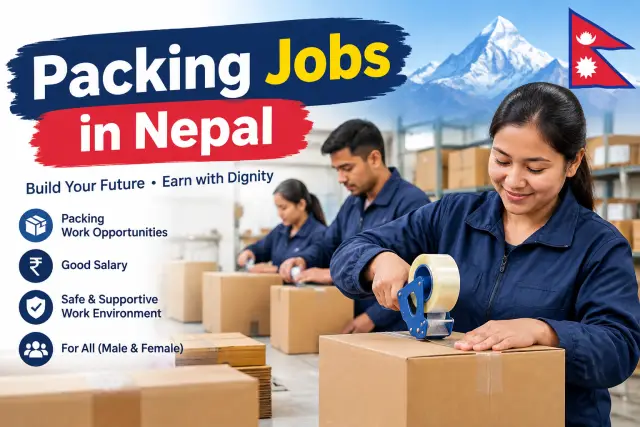
A packing job in Nepal might mean sealing food packets in a factory, labeling parcels in a warehouse, or getting clothes ready for delivery at a small shop. The work varies quite a bit. So before you apply, check what you'll actually be packing and where you'll be doing it.
Some employers hire beginners and teach them on the job. Others want someone who's handled stock, used a sealing machine, or worked in a busy production line. Either way, being careful and showing up on time can matter a lot.
Where can you find packing jobs in Nepal?
Look around places where goods are made, stored, sold, or shipped. Kathmandu Valley has warehouses, online shops, and small businesses that need help preparing orders. You'll also find openings around industrial and trading areas in places like Biratnagar, Birgunj, Pokhara, and Chitwan.
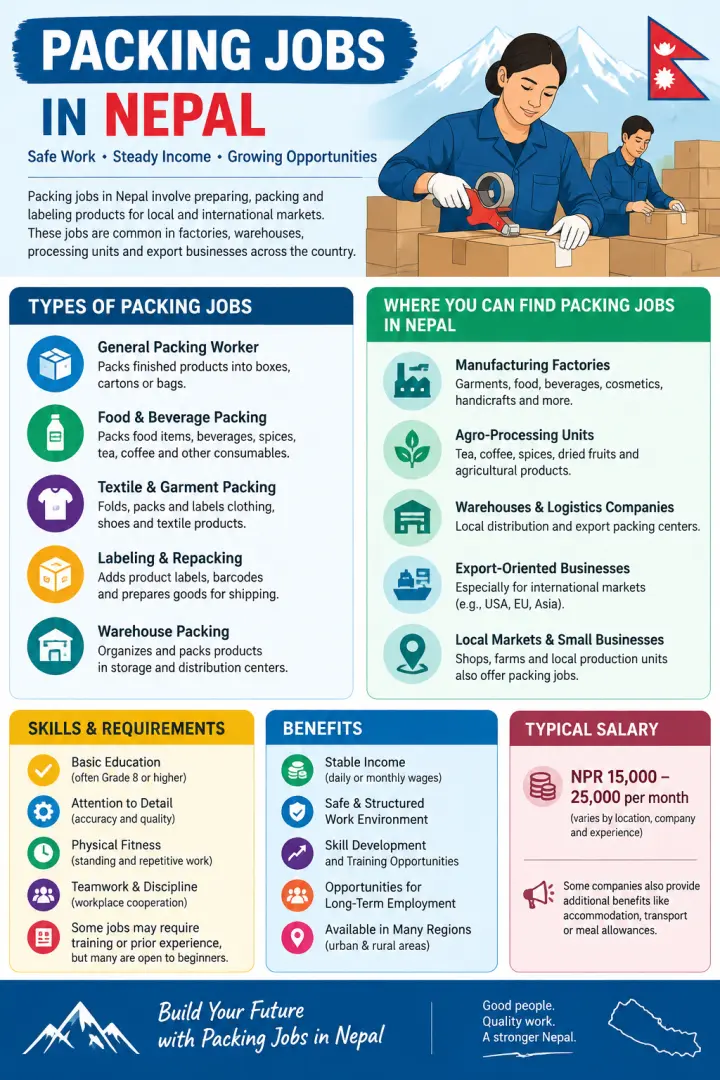
Don't limit your search to the words “packing jobs.” Employers use all sorts of titles for similar work.
- Packing helper or packaging assistant
- Warehouse helper or warehouse assistant
- Production helper or factory worker
- Order packing staff or dispatch assistant
- Food packing worker
- Store assistant, when packing is part of the job
Try searches in Nepali too, including “प्याकिङ काम” and “प्याकिङ जागिर.” Add your location, such as Kathmandu, Lalitpur, Bhaktapur, or Biratnagar, to narrow things down. Job sites, company pages, local notice boards, and referrals from people you trust can all be useful.
JobsNepal and merojob are two places to check for advertised vacancies. Your municipality's employment service centre may also be worth asking about local opportunities. And if there's a factory or warehouse near you, there's no harm in asking whether they're accepting applications.
What does a packing worker actually do?
That depends on the product. Someone packing biscuits won't have quite the same day as someone preparing online orders. Still, a lot of roles share a few basic tasks:
- Putting products into bags, boxes, or other packaging
- Checking quantities against an order or packing list
- Adding labels, dates, or delivery details
- Sealing packages by hand or with equipment you've been trained to use
- Spotting damaged items and reporting them
- Keeping the packing area clean and helping move finished goods
In a warehouse, you might pick an item from a shelf, check its size or colour, wrap it, and attach a shipping label. Get the address wrong and the parcel could end up on the wrong side of town. Small details matter.
Factory work can feel different. You may stand at one station for a long stretch, repeat the same movement, and work at the speed of a production line. Ask about breaks and the physical demands before you accept.
Food and medicine need extra care
Food packing often comes with hygiene rules, such as washing hands and wearing clean protective clothing. Some products also need careful handling to avoid damage or contamination.
For medicines or other sensitive goods, follow the employer's training and instructions closely. Don't guess about labels, batch numbers, or expiry dates. If something looks wrong, tell the supervisor.
Who can apply?
Many entry-level packing jobs don't ask for a long work history. Basic reading and counting can help, especially when you're checking quantities, names, or labels. Some employers may ask for a school certificate; others may care more about whether you can do the work reliably.
Experience in a shop, restaurant, farm, warehouse, or delivery business can be relevant too. Maybe you've counted stock, handled customers' orders, or packed items safely. Put that on your CV, even if your old job title didn't include the word “packing.”
You'll also want to think about the practical side. Can you stand for much of the shift? Is the workplace reachable by bus? Does the schedule fit your responsibilities at home? A job that looks close on a map can still mean a long commute.
Employers must follow Nepal's rules on minimum working age and restrictions on hazardous work for young people. If you're under 18, check whether the job and its conditions are allowed before accepting it.
How much do packing jobs pay in Nepal?
There's no single salary for every packing job. Pay can change with the location, employer, hours, type of product, and whether the role includes other duties. A full-time factory job and a few hours packing orders for a small shop aren't necessarily paid the same way.
Ask for the amount in writing and check whether it's a monthly, daily, or hourly rate. For piece-rate work, where pay depends on how much you pack, ask how the rate is calculated and what you'd realistically be expected to complete.
Nepal's minimum wage rates can change, so check the current rules that apply to the job instead of relying on an old social media post. Government notices or the Department of Labour and Occupational Safety are better places to verify them. Minimum wage and other legal protections may depend on the type of work and employment arrangement.
Questions to ask about money
- What's the basic pay, and when will it be paid?
- How many hours and working days does that cover?
- Is overtime available, and how is it paid?
- Are meals, transport, or accommodation provided or deducted from pay?
- Will you get a payslip, and are there any other deductions?
Don't be shy about asking. A salary figure sounds better when you know what comes with it—and what comes out of it.
Full-time, part-time, or seasonal?
Full-time packing work may be available in factories, warehouses, and businesses that ship orders every day. Shifts can start early or run into the evening, so confirm the timing before you make plans.
Part-time jobs do turn up, but read those ads carefully. “Flexible hours” can mean different things to different employers. Ask which days you're needed and whether the hours are guaranteed.
Some businesses need extra hands before festivals or during busy sales periods. Seasonal work can be a way to gain experience, though it may end once demand slows down. Find out the expected end date and when you'll receive your final pay.
Can you do packing work from home in Nepal?
Maybe, but be careful. Genuine home-based arrangements can exist, yet vague “pack products at home and earn thousands daily” posts deserve a closer look. A nice-looking Facebook page isn't proof that a business is real.
Before agreeing, ask what product you'd pack, who supplies the materials, how completed work is collected, and how payment is calculated. Get the business name, a working contact number, and terms you can keep. If the answers keep changing, walk away.
Never send money just because someone promises to unlock a job. Be especially cautious about registration charges, security deposits, paid training, or demands for a bank password or one-time code. Don't hand over original documents to a stranger either.
How to apply without making it complicated
Start with a short CV. One page is often enough for an entry-level role. Include your name, phone number, location, education, any relevant work, and languages you can use at work. Check that your phone number is correct (easy mistake).
No formal experience? That's okay. Mention practical work you've done, like helping in a family shop, counting stock, or preparing orders—if it's true. Keep it specific instead of filling the page with big claims.
Here's a simple message you can adapt:
“Hello, I'm interested in the packing assistant vacancy in Lalitpur. I've helped count and pack stock at a local shop, and I'm available for an interview. Could you please share the working hours and how to apply? Thank you.”
Send the CV through the employer's stated application channel. If you don't hear back, a polite follow-up after several working days is reasonable. And keep a note of where you've applied, so you don't mix up one vacancy with another.
What to bring to an interview
Take a copy of your CV and any documents the employer has reasonably requested. You might be asked for identification or education details, but check who you're giving copies to and why. Keep your originals with you unless there's a legitimate reason to show them.
Wear clean, comfortable clothes. You don't need to dress like you're applying for a bank manager's job. Be ready to talk about your availability, any lifting or standing limitations, and whether you've worked with stock or packaging before.
Before you say yes
A job title alone doesn't tell you much. Ask to see the workplace if possible, and confirm who your employer will be—especially if an agency or contractor is involved.
Look over the written terms before starting. Pay attention to your duties, work location, hours, weekly rest, leave, pay date, and how either side can end the job. Ask about safety equipment and training if you'll use machinery or handle heavy goods.
If you're unsure about a condition, ask for it to be explained. You can also check current labour rules with the Department of Labour and Occupational Safety or seek advice from a local labour office. Keep copies of your contract and payment records somewhere safe.
A few questions people ask
Do packing jobs require experience?
Not always. Some employers hire beginners and provide training. Others need experience with inventory, machinery, or a particular type of product, so check each vacancy rather than assuming.
Are there packing jobs for students in Nepal?
Students may find part-time or seasonal openings, depending on their location and availability. Check the shift times, age requirements, and expected hours before applying. A role advertised as part-time should still come with clear pay terms.
Can women apply for packing jobs?
Yes. Women can apply for packing roles, just as men can. Ask about practical concerns that matter to you, such as safe transport after a late shift, toilets, breaks, and workplace policies.
Is a packing job the same as a warehouse job?
Sometimes the duties overlap. A packing worker might mainly prepare products for shipment, while a warehouse assistant may also receive stock, organise shelves, or help with dispatch. Read the duties in the vacancy, not just the title.
What if an employer won't put the pay in writing?
Ask for clear written terms before you start. If the employer avoids basic questions about wages, hours, or the workplace, that's a reason to be cautious. There are other vacancies to check.