

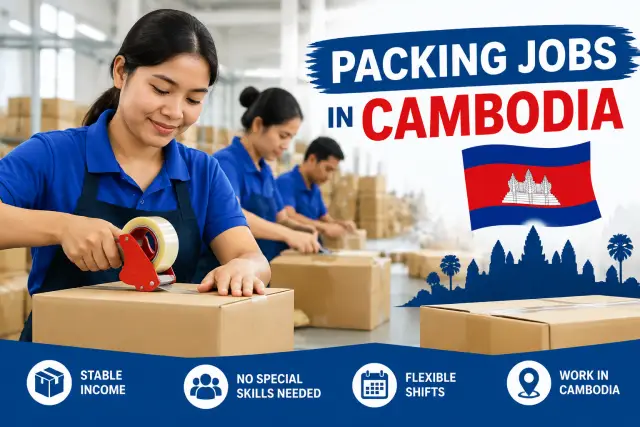
What do packing jobs in Cambodia actually involve?
Packing jobs can mean folding garments into bags, boxing food products, labeling orders in a warehouse, or checking items before they go out for delivery. The work depends on the employer. A small online shop might need one person to prepare parcels, while a factory could have a whole packing line.
Some roles are entry-level, so you may not need a degree or years of experience. But you’ll still need to pay attention. Putting the wrong size in a bag or missing a damaged item can hold up an entire order.
And yes, some jobs involve standing for most of the shift. That’s worth asking about before you accept an offer.
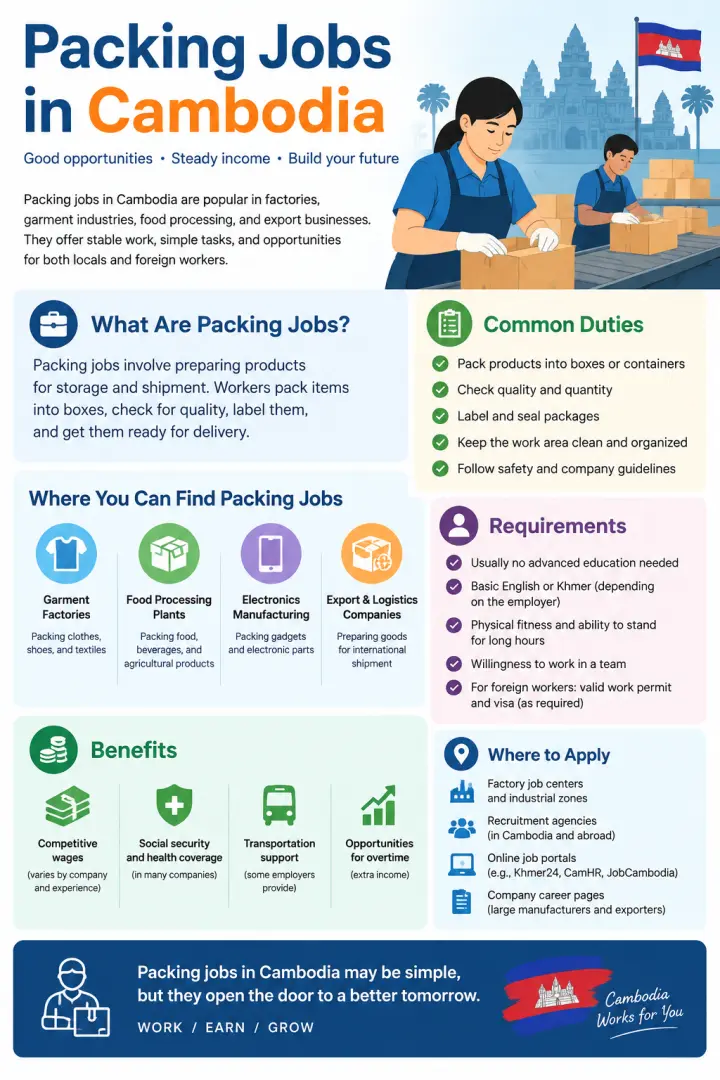
Where to look for packing work
Phnom Penh has plenty of warehouses, garment factories, food businesses, and delivery companies that may hire packers. You’ll also find industrial areas in Kandal and Kampong Speu, where factories and distribution businesses operate.
Jobs can turn up in other provinces too. Agricultural businesses may need workers to sort and pack crops near farms or processing sites, while hotels, shops, and local food producers sometimes hire for smaller packing teams.
Look beyond job titles. An employer might advertise for a warehouse assistant, production helper, order packer, or factory worker even when packing is a big part of the job.
A few places to start
- Search Cambodian job websites such as BongThom and CamHR for “packing,” “packer,” “warehouse assistant,” and “factory worker.”
- Check the National Employment Agency’s job listings and employment services.
- Visit company career pages, especially for manufacturers, logistics firms, and food producers.
- Ask at local employment offices or check job notices near industrial areas.
- Look in Facebook job groups, but verify the employer before sharing documents or agreeing to travel.
Try searches in both English and Khmer if you can. Some local employers advertise only in Khmer, and a useful opening might never show up under an English search.
Types of packing jobs you’ll come across
Garment and footwear packing
After clothes or shoes pass inspection, packing workers may fold them, attach labels, match sizes, and place them in bags or cartons. You might work beside a quality-control team or on a production line with daily targets.
Speed matters, but so does getting the details right. A carton full of shirts with the wrong labels? Not great.
Warehouse and online order packing
These jobs often involve picking products from shelves, checking an order list, wrapping items, and preparing parcels for delivery. Some warehouses use barcode scanners; others rely on paper lists or a phone.
You may also be asked to move stock or count inventory. Check whether the role includes heavy lifting, because “packer” can cover a lot more than taping up boxes.
Food and agricultural packing
Food businesses may hire workers to sort ingredients, seal packages, check dates, or prepare products for shops. Hygiene rules can be stricter here. Expect questions about handwashing, protective clothing, and following instructions around food.
Fruit and vegetable packing may be seasonal, with hours changing around harvests. Ask how long the job is expected to last rather than assuming it’s permanent.
Factory packing and production support
Some factories need workers to pack household goods, electronic parts, or other finished products. The role might include checking for visible damage, counting pieces, sealing cartons, and keeping the work area tidy.
Training is often provided for the employer’s own process. Still, experience with machinery or quality checks can help for certain openings.
How much do packing jobs pay in Cambodia?
There isn’t one salary for every packing job in Cambodia. Pay varies by industry, location, employer, experience, shift, and whether overtime is involved. A warehouse role in Phnom Penh may have a different pay structure from seasonal crop packing in a province.
Some employers quote a monthly wage. Others talk about a daily rate or mention a possible total that includes overtime and allowances. Ask for the basic pay separately from extras—actually, ask for the full breakdown in writing.
Cambodia sets a minimum wage for workers in the garment, textile, footwear, travel goods, and bag sectors. The rate can change, and it doesn’t automatically apply to every packing job in every industry. Check the current official rate if the job falls in one of those sectors.
Before accepting, get clear answers on:
- Basic pay and when you’ll receive it
- Overtime rates and whether extra hours are expected
- Attendance, meal, transport, or housing allowances, if offered
- Any deductions and what they’re for
- Whether the amount quoted is before or after deductions
Don’t compare two offers on the headline number alone. A slightly higher wage can disappear fast if the commute is long or you have to pay for accommodation.
Hours, shifts, and the practical stuff
Many packing roles follow a regular daytime shift, but factories and warehouses may also run evenings, weekends, or rotating schedules. Busy periods can mean more orders and requests for overtime.
Ask what a normal week looks like. Then ask what happens during the busiest week. Those can be two very different answers.
Cambodian labor law sets rules on working hours, overtime, rest days, and leave, though the details can depend on the situation. If an employer is vague about hours or says there are no rest days, get advice before signing anything.
And check the basics: Is there a safe place to drink water? Are gloves or other protective equipment supplied when needed? Who pays for transport if the shift ends late? Small details matter when you’re doing the job every day.
Do you need experience?
Not always. Entry-level packing jobs in Cambodia may be open to people who haven’t worked in a factory or warehouse before. Employers usually want someone who can follow instructions, arrive on time, and keep up with the work safely.
Reading labels, counting accurately, and using a phone can be useful. For warehouse jobs, knowing how to use a barcode scanner or manage stock is a plus. Basic English may help with some labels or international companies, but many local roles don’t require fluent English.
If you’ve worked in a shop, restaurant, farm, or market, don’t ignore that experience. Handling stock, checking orders, and working with a team are all relevant.
What to put on your application
Keep your CV simple. Include your name, contact details, location, work history, and any skills that fit the job. If you’ve never had a formal job, you can mention relevant informal work or training—just be honest about what you did.
For example, someone who helped at a family shop could mention sorting deliveries, counting goods, and preparing customer orders. That tells an employer more than writing “hard worker” five times.
Some employers may ask for identification, references, or other documents as part of hiring. Share copies only after you’ve checked who’s requesting them and why. You shouldn’t hand over your original passport or ID for an employer to keep.
Questions to ask before you say yes
An interview isn’t just for the employer. You’re allowed to ask what the job is really like (and you should).
- What products will I pack, and what does a normal shift involve?
- Where exactly is the workplace? Can I see it before accepting?
- What’s the basic salary, and how is overtime paid?
- How many hours and rest days will I usually have?
- Is there a probation period, and does pay change during it?
- Will I get a written contract? Which language is it in?
- Are meals, transport, or accommodation included, and are there deductions?
- Am I covered by the National Social Security Fund, and when will I be registered if eligible?
Take a photo or keep a copy of the offer and contract. If anything is different from what you were promised, ask about it before you start.
Watch out for packing job scams
A real job ad should give you a way to identify the employer and understand the work. Be cautious if the message promises unusually high pay for very easy packing, won’t name the company, or pressures you to leave immediately.
Other warning signs include requests for upfront payments to secure the job, demands for your original documents, and a meeting point that keeps changing. An employer who won’t tell you the actual workplace is a problem. Full stop.
Verify the company independently rather than calling only the number in the ad. Check its website or public contact details, ask for the work address, and tell someone you trust where you’re going. If a recruiter offers a job across a border, check the visa, work permit, contract, and recruitment arrangements before traveling.
Cambodia has also seen trafficking linked to deceptive job offers. If you’re threatened, prevented from leaving, or have your documents taken, contact local police or a trusted support organization as soon as it’s safe. Foreign nationals can also contact their embassy or consulate.
Contracts, benefits, and work permits
Read the contract before signing, even if the recruiter says it’s just a formality. Check the employer’s name, job location, pay, hours, duration, and terms for ending the job. If you don’t understand the language, ask someone you trust to explain it.
Depending on the job and your eligibility, employment benefits and social security coverage may apply. Ask how the employer handles National Social Security Fund registration and keep any registration details you receive. For questions about your rights, contact Cambodia’s Ministry of Labour and Vocational Training, a local labor office, or a workers’ organization.
Foreign nationals generally need the appropriate permission to work in Cambodia. Don’t assume a tourist entry gives you the right to take a packing job. Check current visa and work permit requirements with the relevant Cambodian authorities and the employer before making plans.
How to improve your chances of getting hired
Apply to several suitable openings instead of waiting on one company. Keep a short list of where you applied, the contact person, and the date. It makes following up much easier.
When you call or message, mention the specific role and ask whether it’s still open. For an interview, bring the documents the employer has reasonably requested, wear clean, comfortable clothes, and be ready to talk about your availability.
Be honest about lifting limits or a schedule you can’t work. A job that fits your situation is better than one you have to leave after a week.
Common questions about packing jobs in Cambodia
Can I get a packing job without a degree?
Yes, many entry-level roles don’t ask for a degree. Requirements vary, though, and some employers may prefer previous factory, warehouse, or food-handling experience.
Are packing jobs available for women and men?
Both women and men work in packing roles. The right job depends on the actual duties, working conditions, and your ability to do the work safely—not an assumption about who should do it.
Are there work-from-home packing jobs?
You may see these advertised, but check them carefully. Be especially wary if someone asks you to buy a starter kit, pay a registration fee, or recruit other people before you can earn money. Verify the business and payment terms first.
When should I follow up after applying?
If the listing gives a closing date, give the employer a little time after that date. Otherwise, a polite message after several working days is reasonable. Keep it short: your name, the role, and a question about the status of your application.