


Where to find driver jobs in Cambodia
Start with the places where people are actually hiring: Cambodian job websites, company career pages, recruitment agencies, and local Facebook or Telegram job groups. Search for “driver jobs in Cambodia,” but try more specific terms too, like “company driver Phnom Penh” or “delivery driver Siem Reap.”
Location matters. Phnom Penh tends to have a wider mix of office, delivery, and transport jobs, while tourist areas such as Siem Reap may have more work linked to hotels and visitors. Sihanoukville can be worth checking for logistics and transport roles. Openings change, though, so look at recent postings rather than old search results.
And don't ignore the old-fashioned approach. Hotels, restaurants, shops, and transport companies sometimes hear about vacancies through their own staff before a job appears online. Ask around (without handing over your documents to just anyone).
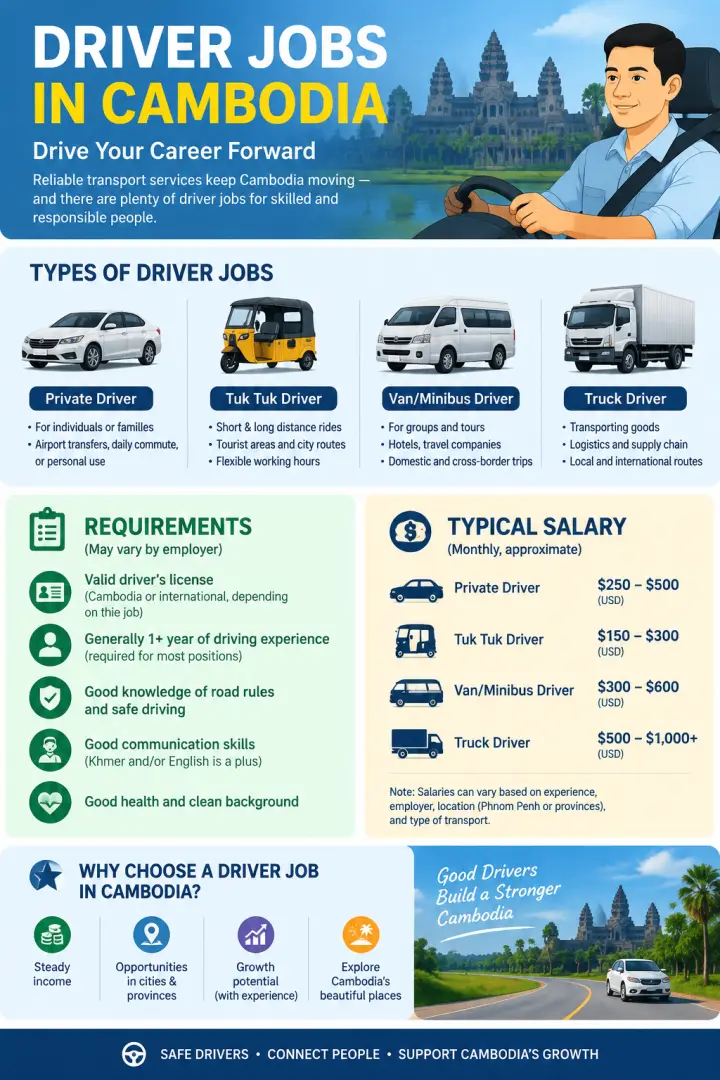
What kind of driving work suits you?
“Driver” can mean a lot of things. Someone delivering parcels on a motorbike has a very different day from a driver taking a family to school and work. Before applying everywhere, think about the vehicle you can legally drive, the hours you want, and whether you're comfortable dealing with customers.
Company and office drivers
Company drivers may take staff to meetings, collect visitors from the airport, run errands, or look after a company vehicle. Some roles involve regular office hours; others need early starts, evening trips, or travel outside the city.
A clean driving record, punctuality, and a calm manner can help here. English may be useful when working with international staff, but the language requirements depend on the employer. Some companies also ask drivers to keep trip records or arrange basic vehicle maintenance.
Personal and family drivers
These jobs can involve school runs, shopping trips, airport pickups, and waiting between journeys. The work may sound simple, but trust matters a lot when you're working closely with one household.
Ask about the schedule before accepting. A job that starts with an early school run and ends after a late dinner can make for a long day, even if there's downtime in between. Find out whether meals, overtime, days off, or accommodation are included too.
Delivery drivers and riders
Restaurants, supermarkets, courier businesses, and online shops all need deliveries. Some hire employees directly, while others work with independent riders or drivers through an app.
Speed isn't the only thing that counts. You'll need to find addresses, contact customers, handle items carefully, and stay safe in traffic. For app-based work, check whether you need your own motorbike or car, smartphone, mobile data, and delivery bag. And find out who pays for fuel and repairs.
Taxi, tuk-tuk, and ride-hailing work
If you like meeting people and don't mind an unpredictable schedule, passenger transport might appeal. Work may come through a company, a hotel, an app, or your own contacts, depending on the arrangement.
Look closely at the costs. Vehicle rental, fuel, app fees, maintenance, and insurance can all affect what you take home. A busy day doesn't always mean a profitable one.
Truck and logistics drivers
Truck jobs in Cambodia can involve moving goods between warehouses, shops, construction sites, ports, and other locations. Some routes keep you close to home. Others involve long distances or overnight trips.
Employers may ask for experience with a particular vehicle, loading procedures, or delivery paperwork. Make sure your licence covers the vehicle you'll be driving, and ask what happens if a truck breaks down on the road.
Hotel and tourism drivers
Hotels, travel companies, and tour operators may hire drivers for airport transfers and day trips. Familiarity with local routes helps, and some roles call for basic English or another language used by guests.
Schedules can shift with flight times and bookings. If you're applying in Siem Reap, for example, ask whether trips include temple visits, airport transfers, or journeys to other provinces—and whether waiting time is paid.
Licence and documents: check these first
You'll need the right licence for the vehicle and work involved. Requirements can differ for motorbikes, cars, and heavier vehicles, so don't assume that one licence covers every job. Check current rules with Cambodia's Ministry of Public Works and Transport or the relevant licensing office, especially if you're applying for truck or commercial driving work.
Foreign applicants should also check whether their existing licence can be used or converted, and what immigration and work documents are required. A tourist visa alone isn't something to rely on as permission to take a job. Ask the relevant authorities and the employer about the current process before making plans.
Employers commonly request some of the following:
- A CV with your contact details and driving experience
- A valid driving licence for the role
- Identification and, where relevant, proof that you're allowed to work
- References from a previous employer or customer
- Details of your vehicle, if the job requires you to use your own
Some roles may also ask for a health check or other documents. Ask why each one is needed, and keep your original passport and identity documents with you.
How much do driver jobs pay in Cambodia?
Pay varies a lot by role, location, vehicle, experience, and employer. A full-time company driver on a fixed monthly wage won't have the same pay setup as a delivery rider paid by trip. Some jobs offer a base salary plus overtime or allowances; others depend almost entirely on the number of journeys completed.
There's no single figure that'll tell you what your offer is worth. Compare current vacancies for similar work in the same area, then ask for the details in writing.
For delivery and ride-hailing work, gross earnings aren't the same as take-home pay. Fuel, repairs, vehicle rental, phone data, platform fees, and insurance can take a bite out of the total. If an advert promises a big daily amount, ask whether that's typical, whether it's before expenses, and how many hours you'd need to work.
Questions to ask about pay
- Is the amount fixed per month, per day, or per trip?
- How many hours and days are expected?
- Are overtime, waiting time, and public holiday work paid separately?
- Who covers fuel, tolls, parking, repairs, and vehicle insurance?
- When will you be paid, and will you get a written breakdown?
Don't forget days off. A slightly higher wage can look less appealing when the job has a much longer schedule or leaves you paying for every repair yourself.
Making your application stand out
Keep your CV straightforward. Put your name, phone number, location, licence details, and relevant experience near the top. If you've driven a company car, delivered parcels, or handled airport pickups, say so plainly and include the dates if you can.
Be specific. “Drove a delivery van around Phnom Penh and kept daily trip records” tells an employer more than “hard worker.” You can mention languages you actually speak, familiarity with map apps, and experience maintaining a vehicle. Don't claim a licence category or language level you don't have—the employer may check.
New to driving work? Include other experience that shows reliability. A shop job, for example, might have taught you how to deal with customers or handle cash. A short reference from a former supervisor can help, even if your last job wasn't behind the wheel.
What to expect at an interview
Some employers will want a road test. Others may ask how you'd handle a late pickup, a wrong address, or a customer who can't be reached. Bring the documents they've requested, arrive on time, and be ready to explain your previous driving work.
It's your chance to ask questions too. Will you drive the same vehicle each day? Are trips mostly in town? Who do you call after an accident? Those details matter more than a vague job title.
A few things to watch out for
Be careful with listings that promise unusually high pay but won't explain the work, the employer, or where the job is based. Pressure to pay a large recruitment fee or hand over your passport is a serious reason to pause. So is an offer that asks you to cross a border or travel to a remote location without clear employment details.
Check the company independently where you can. Call a publicly listed number, look for a real address, and ask for a written offer that explains the role and pay. Don't send money just because someone says the vacancy will disappear today.
If you're asked for copies of sensitive documents, make sure you know who's receiving them and why. And if a job turns out to be different from what was promised, get advice from a trusted person or an appropriate local labour support organisation.
Before you say yes
Read the contract—or ask someone you trust to help you understand it—before you start. Check the employer's name, your duties, normal hours, pay, leave, and notice terms. If you're using your own vehicle, get the arrangement for expenses and damage written down.
Insurance is easy to overlook. Ask what cover applies when you're driving for work, including cover for passengers or goods where relevant. Also ask how accidents, fines, and repairs are handled. Don't rely on a quick verbal promise if the answer could affect your income.
Finally, try the route you'll be expected to take to work. An early pickup across Phnom Penh can feel very different once you've factored in traffic and the trip home. Small detail? Maybe. It can change how the whole job fits into your day.