

Electrician Jobs in India: A Practical Guide
Electricians are needed almost everywhere, from apartment buildings and small shops to factories, construction sites and solar plants. If you enjoy hands-on work, solving problems and learning how things operate, an electrician job can offer a useful career path.
There’s more than one way into the trade. Some people start as helpers, while others complete an Industrial Training Institute course or an apprenticeship before looking for full-time work. Your pay and responsibilities will depend on your training, experience, location and the kind of employer you work for.
Here’s a practical look at electrician jobs in India, including qualifications, salary expectations, job searches and career growth.
What Does an Electrician Do?
An electrician installs, checks, maintains and repairs electrical systems. The exact work varies by job. Someone working in homes might deal with wiring, switches and distribution boards, while an industrial electrician may maintain motors, control panels and machinery.
Common responsibilities include:
- Installing and maintaining wiring, switches, sockets and lighting
- Reading electrical drawings and following installation plans
- Checking circuits and equipment with suitable testing tools
- Finding faults and repairing or replacing damaged components
- Maintaining records of inspections and completed work
- Following electrical safety procedures and using protective equipment
Electrical work can be dangerous. Employers generally expect workers to follow site procedures, isolate and verify equipment before working when required, and use the right protective gear. Never take on work you aren’t trained or authorised to do.
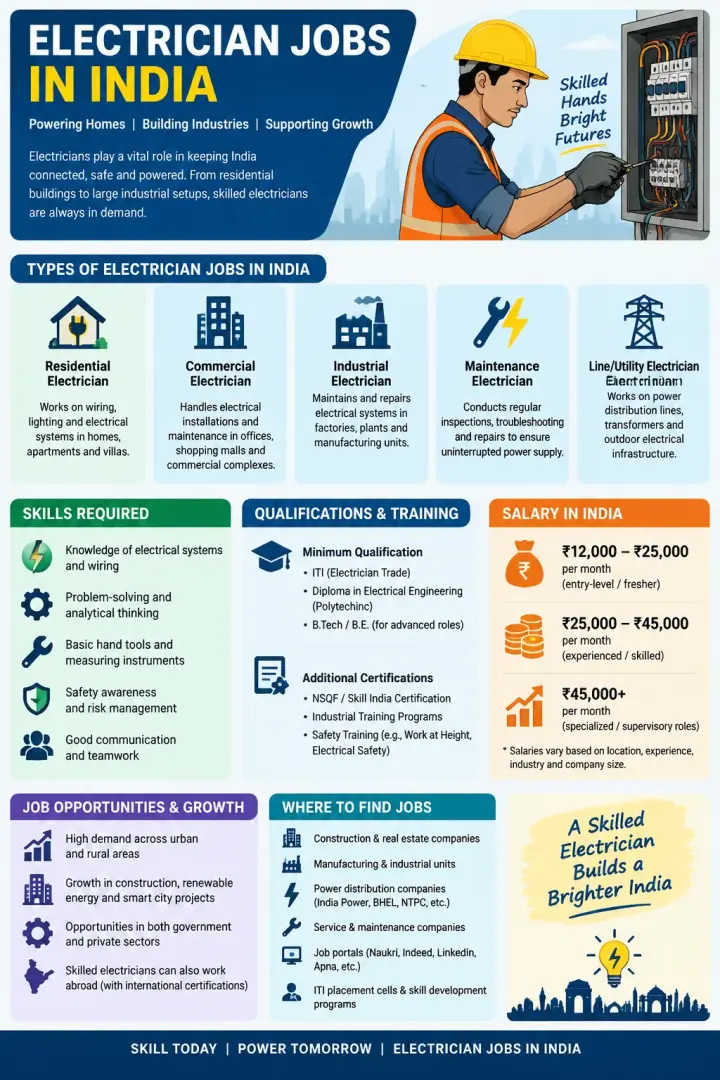
Types of Electrician Jobs in India
Electrician vacancies come in several forms. Knowing the difference can help you choose training and search for jobs that match your interests.
Residential Electrician
Residential electricians work in houses, flats and housing societies. Their work can include wiring, installing lights and fans, checking distribution boards and responding to electrical faults. Good communication helps because you’ll often speak directly with residents.
Commercial Electrician
Commercial electricians work in places such as offices, malls, hotels, schools and hospitals. These jobs may involve larger lighting systems, power distribution and regular maintenance. Some roles require shift work, especially in buildings that operate around the clock.
Industrial Electrician
Industrial electricians maintain electrical equipment in factories, warehouses and manufacturing plants. Depending on the role, they may work with motors, control panels, sensors and automated machinery. Employers often look for people who can read diagrams and troubleshoot equipment.
Maintenance Electrician
A maintenance electrician checks equipment, handles breakdowns and carries out planned maintenance. These jobs are available in factories, commercial buildings, hospitals and residential complexes. The ability to diagnose a fault calmly can make a big difference in this role.
Construction Electrician
Construction electricians install electrical systems in new buildings and renovation projects. The work may involve reading drawings, laying conduits, pulling cables and coordinating with other trades. Site conditions and project locations can change, so flexibility is useful.
Solar and Renewable Energy Electrician
Solar companies hire electricians and technicians for installation, inspection and maintenance work. Roles vary, but knowledge of electrical safety, inverters and solar systems can help. Look for relevant training and make sure the job’s responsibilities match your qualifications.
Electrician Qualifications in India
Requirements depend on the employer and the role. A helper position may accept someone with limited experience, while a technician or supervisor role may require formal training and several years on the job.
ITI Electrician Course
One common route is the Electrician trade under the Craftsmen Training Scheme at an ITI. The course is generally two years long and combines practical training with trade theory. Eligibility typically includes passing Class 10 with science and mathematics, or an accepted equivalent. Check the current admission rules with the ITI or state admission authority before applying.
When choosing an institute, check its affiliation, facilities, fees and placement support. Ask how much practical workshop time students receive. A certificate matters, but being comfortable with tools and safe working practices matters too.
Apprenticeship
An apprenticeship can give you structured, on-the-job training with an employer. Opportunities and eligibility vary, so read the details of each opening carefully. Apprentices receive a stipend subject to applicable rules and the terms of their engagement; the amount is not the same as a regular employee’s salary.
You can look for apprenticeship opportunities through the official apprenticeship portal at apprenticeshipindia.gov.in, as well as through employers and training institutes.
Other Routes
Some employers hire trainees or helpers and provide practical training. Diploma holders in electrical engineering may also find technician or supervisory openings, though these roles can have different requirements from electrician jobs.
For certain types of electrical work, a licence, permit or certificate of competency may be required under applicable rules. Requirements can differ by state and the nature of the work. If you plan to work independently, check with your state’s electrical licensing authority before accepting jobs.
Skills Employers Look For
Technical knowledge is important, but it isn’t the only thing that helps you get hired. Employers also want people who can follow instructions, work safely and turn up reliably.
- Electrical basics: Understanding circuits, wiring, protective devices and common equipment.
- Tool use: Knowing how to use and look after tools and test instruments appropriate to your training.
- Fault finding: Taking a careful, methodical approach instead of guessing.
- Drawing interpretation: Reading basic wiring diagrams and understanding site instructions.
- Safety awareness: Following isolation procedures, site rules and relevant regulations.
- Communication: Explaining an issue clearly to a supervisor, colleague or customer.
- Physical readiness: Being prepared for standing, climbing or working in confined spaces when the job requires it.
Honestly, reliability can be a real advantage for a fresher. If you’re willing to learn, ask sensible questions and take safety seriously, make that clear during an interview.
Electrician Salary in India
Electrician salaries in India vary widely. A job in a metro city may pay more than one in a smaller town, but living costs can also be higher. Industry, shifts, overtime, accommodation and your experience all affect the offer.
As a broad guide, monthly pay for full-time roles may fall in these ranges:
- Helper or entry-level worker: around ₹12,000 to ₹18,000
- Fresher with relevant ITI training: around ₹15,000 to ₹25,000
- Experienced electrician: around ₹20,000 to ₹35,000
- Senior, specialised or supervisory roles: around ₹35,000 to ₹60,000 or more
These are indicative figures, not guaranteed rates. Some jobs pay outside these ranges, and apprenticeships usually have a different stipend structure. Before accepting an offer, ask whether the quoted amount is gross pay or take-home pay and check the treatment of overtime, travel, accommodation and deductions.
Where to Find Electrician Jobs
You can search online and offline. Don’t limit yourself to listings with the exact title electrician; employers use several names for similar positions.
- Job portals: Search for electrician, electrical technician, maintenance electrician, industrial electrician and ITI electrician jobs.
- National Career Service: Check vacancies and career resources at ncs.gov.in.
- Company websites: Visit the careers pages of manufacturers, facility management companies, construction firms and solar businesses.
- ITI placement cells: Ask instructors and placement staff about local employers and upcoming drives.
- Local contractors: Enquire about trainee, helper and experienced openings with established electrical contractors.
- Professional contacts: Let former classmates, trainers and colleagues know what kind of role you’re seeking.
Try adding your city and experience level to your search, such as ITI electrician jobs in Pune or maintenance electrician fresher jobs in Chennai. For government electrician jobs, check official recruitment notifications for eligibility, selection stages and application deadlines.
Watch Out for Job Scams
Be cautious if someone promises a guaranteed job in exchange for an upfront payment. Verify the employer through its official website or contact details, read the offer carefully and don’t share sensitive documents with an unverified recruiter. Government portals and legitimate employers should be approached through their official channels.
How to Apply for Electrician Jobs
A straightforward application is usually better than an elaborate one. Employers need to see what you’ve learned, what equipment you’ve worked with and whether you’re suitable for the role.
Prepare a Clear Resume
Include your contact details, location, education, ITI trade or other qualification, apprenticeship and work history. List practical skills that match the vacancy, but be honest about your experience. If you’re a fresher, mention workshop training, relevant projects and tools you’ve used under supervision.
Read the Job Description
Check the required qualification, shift timing, work location and experience. A role involving factory machinery may need different skills from a residential wiring job. Tailor your resume to the opening without claiming skills you don’t have.
Prepare for the Interview
You may be asked about your training, basic electrical concepts, safety practices and previous work. Some employers also conduct a practical assessment. Review your course notes and be ready to explain how you approach a task safely.
If you don’t know an answer, say so. It’s better than pretending, particularly in a trade where mistakes can cause serious harm.
Check the Offer
Before joining, confirm the job title, location, working hours, pay, weekly rest day and benefits. Ask who provides safety equipment and whether the company offers training. Keep a copy of the written offer and any employment documents.
Career Growth for Electricians
An entry-level job can lead to more specialised work as you gain experience. A helper may progress to an electrician role after suitable training, while an experienced electrician may move into maintenance, industrial controls, solar installations or team supervision.
Some electricians eventually start a contracting business. That can offer independence, but it also brings responsibility for compliance, customer service, quotations and managing work safely. Check the licensing and registration requirements that apply in your state before taking that step.
Keep learning as equipment and employer needs change. Short courses in areas relevant to your job, along with documented experience, can help you qualify for better opportunities.
Frequently Asked Questions
Can a fresher get an electrician job in India?
Yes. Freshers can look for trainee, apprentice, helper and entry-level electrician roles. ITI training can improve your chances, but each employer sets its own requirements.
Is an ITI certificate compulsory for every electrician job?
No single qualification applies to every vacancy. Some helper roles may not require an ITI certificate, while many employers prefer or require formal training. Certain work may also have separate licensing or competency requirements.
Which industries hire electricians?
Electricians work in construction, manufacturing, facility management, hospitality, healthcare, renewable energy and many other sectors. Local contractors and housing societies also hire them.
Are electrician jobs available in government organisations?
Government bodies and public-sector organisations sometimes advertise electrician and electrical technician vacancies. Qualifications and selection methods vary, so rely on the official notification for each recruitment.
What’s the best way to earn more as an electrician?
Build practical experience, work safely and develop skills that employers need. Specialising in an area such as industrial maintenance or solar systems may help, though pay still depends on the employer, location and role. Compare the full offer rather than salary alone.
Getting Started
If you’re new to the trade, start by comparing recognised training options and apprenticeship openings near you. If you already have experience, update your resume with the equipment and systems you’ve worked on, then search for roles that match your skills. A steady approach to learning and safety can serve you well throughout your career.