

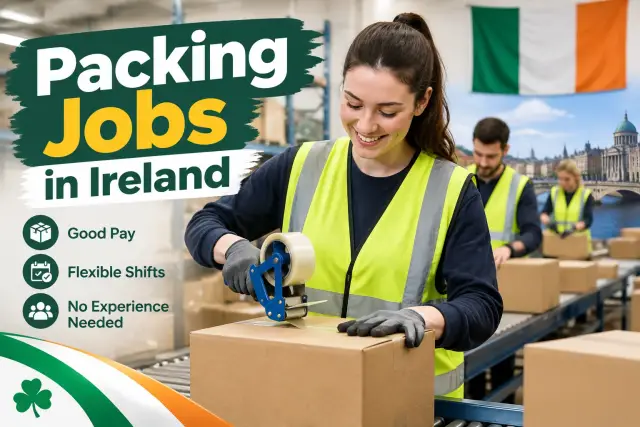
What does a packing job actually involve?
You might spend a shift putting food into trays, checking labels on boxes or getting online orders ready to ship. Packing jobs in Ireland cover all sorts of workplaces, from busy food factories to small warehouses.
Some roles are straightforward entry-level jobs. Others ask for experience with machinery, stock systems or quality checks. The job title doesn't always tell you much, so it's worth reading the duties before you apply.
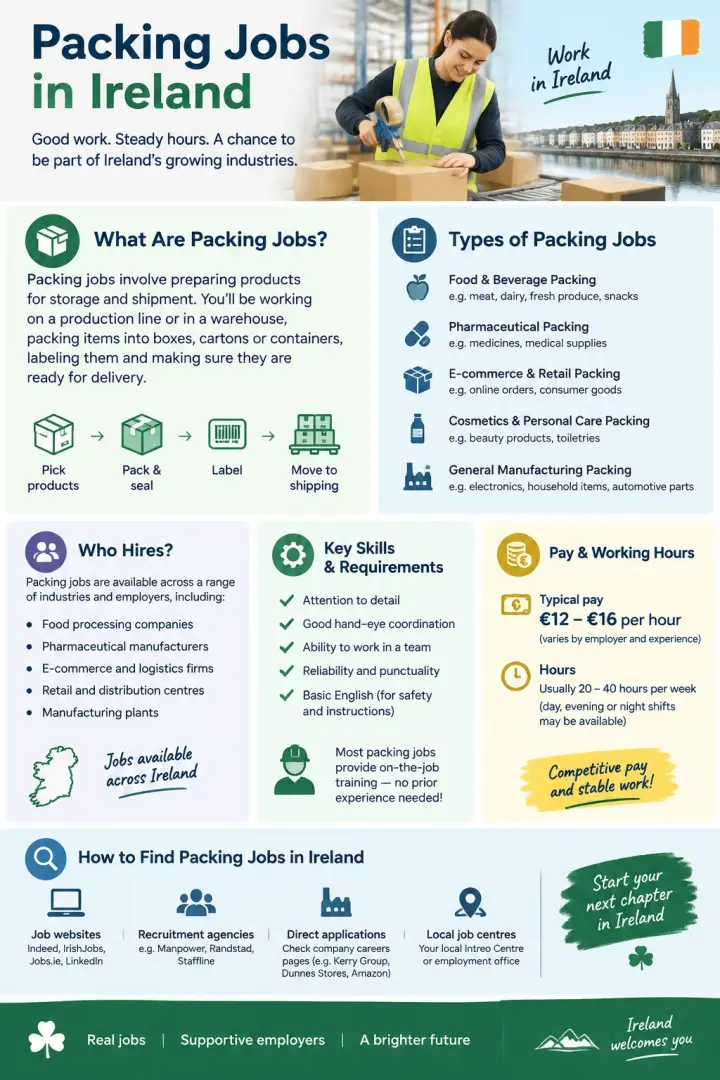
You'll often work as part of a team and follow a set process. That could mean standing at a packing line, counting items, sealing cartons and moving finished boxes to a dispatch area. In a warehouse, you might also pick products from shelves before packing them for delivery.
And yes, some jobs are physically demanding. If an ad mentions lifting, long periods of standing or a fast-paced line, take that seriously and ask what a normal shift looks like.
Where to find packing jobs in Ireland
Start with the big job sites, but don't stop there. Try searches such as “packing operative Ireland”, “packer warehouse Dublin” or “production operative Cork”. Employers use different titles for similar work, and a search for “packing jobs” alone can miss a lot.
You'll find vacancies on sites such as JobsIreland, Indeed and IrishJobs. Recruitment agencies also advertise temporary and permanent packing roles. Check company career pages too, especially if there's a food producer, distribution centre or manufacturer near you.
Some useful search terms to try:
- Packing operative or packing assistant
- Warehouse operative and order packer
- Production operative or factory operative
- Food packing operative
- Pick and pack operative
- Seasonal packer or temporary warehouse worker
Location matters. Dublin has plenty of logistics and distribution employers, while areas around Cork, Limerick, Galway and Waterford also have factories and warehouses. Don't overlook smaller towns, either. Food production and packaging businesses aren't all based in cities.
Look at the actual workplace address before applying. A job listed under a city name might be on an industrial estate outside town, and a 6am start can be awkward without a car or a suitable bus route. A quick map check saves a lot of hassle.
Food packing, warehouse work or factory shifts?
These jobs can sound alike on paper, but the day-to-day work isn't always the same.
Food packing jobs
Food packers may weigh products, fill trays, seal packaging and check use-by dates. Hygiene rules are a big part of the job. You'll probably need to wear protective clothing, follow handwashing procedures and leave jewellery at home.
Some food production areas are cold. Others are noisy or involve early starts. Ask about the working environment if the advert doesn't say much.
Warehouse packing jobs
Warehouse packers usually prepare orders for shops or customers. That might mean scanning items, choosing the right box, adding protective packaging and printing shipping labels. Accuracy matters when someone's waiting on the other end.
In a pick and pack role, you'll collect the goods as well. Expect some walking, and check whether the job involves heavy lifting or targets for the number of orders completed.
Factory and production packing
Here, packing can be one part of a longer production line. You might inspect finished goods, load packaging materials into a machine or record the number of items packed. Some employers provide training on the equipment; others want people who've used similar machines before.
Pharmaceutical and medical device companies may have strict cleanliness and record-keeping rules. Read those ads carefully, as some ask for specific experience or qualifications.
Do you need experience to get hired?
Not always. Many entry-level packing jobs offer training, particularly when the work follows a clear routine. If you're reliable, comfortable following instructions and able to work safely, you've got a reasonable starting point.
Experience still helps, of course. Retail stockroom work, kitchen shifts, cleaning, manufacturing or delivery work can all give you examples to talk about. Even if you haven't packed orders before, you might have handled stock, checked dates or worked to a deadline.
Employers may also look for basic English for safety instructions, paperwork and teamwork. The level needed depends on the job, so don't assume every employer expects the same thing.
A forklift licence isn't normally needed for a basic packing role. If an ad combines packing with forklift work, check the training and certification requirements before applying.
Pay, shifts and the questions worth asking
Packing jobs in Ireland are commonly advertised with an hourly rate. Pay varies by employer, location, shift and experience. Some roles offer a higher rate for nights or Sundays, but don't assume that every shift comes with extra pay.
Check the current national minimum wage on Citizens Information or the Workplace Relations Commission website. Different minimum rates can apply based on age, and rates can change. The advertised figure should also make clear whether it's an hourly rate or a yearly salary.
Before accepting an offer, I'd want clear answers to a few practical questions:
- How many hours are guaranteed each week?
- Are shifts fixed, rotating or given at short notice?
- Is there extra pay for nights, Sundays or overtime?
- Are breaks paid or unpaid?
- Is the job temporary, permanent or through an agency?
- Where exactly is the workplace, and is there parking or public transport?
A rate that looks good can feel different if you're offered only a few hours one week and a full schedule the next. Equally, a regular daytime shift might suit you better than a higher-paying night shift. Depends on your life, really.
Overtime premiums aren't automatic in every Irish job. Check your contract or the applicable employment terms rather than counting on time-and-a-half.
Applying for packing jobs with no experience
Keep your CV simple. Put your contact details at the top, followed by a short profile and your work history. For each past job, mention the parts that fit the role: working quickly without skipping checks, following hygiene rules, handling stock or turning up for early shifts.
New to work? Include relevant training, volunteering or responsibilities that show you can follow a routine and work with others. You don't need to pretend you've used a packing machine if you haven't.
A short application message can be enough:
“Hi, I'm interested in the packing operative role. I'm available for early shifts and have experience working in a busy shop stockroom. I've attached my CV and would be happy to discuss the role.”
Change it to match your own experience and the job advert. And check the spelling of the company name before sending it (easy to miss when you're applying for several roles at once).
Getting ready for an interview
You'll likely be asked about your availability, transport and any past work in a busy environment. Have an example ready for a time you followed instructions, spotted a mistake or helped a team finish a task.
It's fine to ask questions too. What are the shift times? How much lifting is involved? Who provides safety shoes or other protective equipment? A good interview should help you decide if the job works for you.
Temporary and agency packing work
Temporary packing jobs can be useful if you're looking for a quick start, seasonal hours or a way into warehouse work. Some assignments last a few days; others run for months. A temporary role can lead to a permanent offer, but that's not guaranteed.
When an agency contacts you, find out who'll employ and pay you, how often you'll be paid and where to send your timesheet. Ask for the assignment details in writing. You should know the rate, expected hours and location before you show up.
Agency workers have employment rights too. The Workplace Relations Commission has information on agency work and equal treatment. If something in your contract or payslip doesn't look right, ask for an explanation and keep a copy of the paperwork.
Can you apply from outside Ireland?
That depends on your citizenship and immigration permission. Irish, UK, EU, EEA and Swiss citizens generally don't need an Irish employment permit to work in Ireland. For other applicants, the rules depend on their immigration status and the type of job.
Don't assume a packing vacancy comes with visa sponsorship. Some occupations aren't eligible for an employment permit, and eligibility depends on the exact role and current rules. Check the official employment permits information from the Department of Enterprise, Tourism and Employment, along with Irish immigration guidance, before paying for travel or making plans.
If an employer says they'll sponsor you, ask which permit they intend to use and confirm that the occupation is eligible. A genuine job offer should come with clear written details, not just a message promising a visa.
Know your rights before your first shift
Most employees in Ireland have rights around pay, working time, breaks and holidays. Your exact entitlement depends on your circumstances, so check the details rather than relying on a coworker's contract.
Full-time employees are generally entitled to four working weeks of paid annual leave per leave year. Part-time workers also build up annual leave, usually based on the time they work. Public holiday benefits have their own rules, including qualifying conditions for some part-time employees.
You'll also need to deal with tax. Give your employer the information they need to register your job with Revenue. A Personal Public Service number, usually called a PPS number, is used for dealings with public services and tax. If you're new to Ireland or don't have one yet, check the current application process on the government website. You can ask the employer how they'll handle payroll while your details are being sorted.
Read your payslips and keep them. Mistakes happen, and it's much easier to raise a question when you've got your hours and pay records in front of you.
Watch out for dodgy job offers
A real packing job shouldn't require you to send money to a stranger for a guaranteed position. Be wary of anyone asking for an upfront payment for a job, a permit or equipment, especially if they're rushing you or won't give you a company address.
Check the employer's website and contact details independently. If an agency is involved, check its credentials and the rules on employment agencies through official Irish government sources. Don't send copies of your passport or bank details to an unverified contact just because they've sent a convincing-looking message.
And if the pay seems wildly high for basic packing work, pause. Ask for the contract, look up the business and make sure the job actually exists.
Ready to start looking?
Pick a few search terms, set a location that works for your commute and check new listings regularly. Packing vacancies can move quickly, especially when an employer needs people for a seasonal rush.
But don't skip the details just to get an application in. Hours, travel and the type of work matter as much as the job title. Sometimes more.