

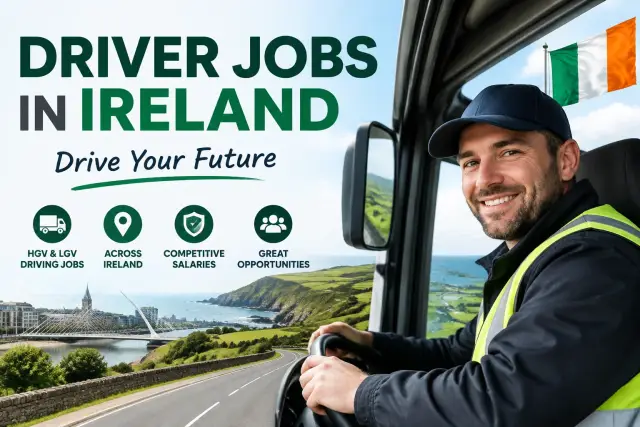
Driver Jobs in Ireland: A Practical Guide for Jobseekers
Driver jobs in Ireland cover a lot more than getting behind the wheel of a lorry. You could deliver parcels around Dublin, transport goods between counties, drive a bus, work as a courier or help passengers get where they need to go.
The right job depends on your licence, experience and the kind of working day you want. Some roles offer regular local routes, while others involve early starts, overnight trips or weekend shifts. Here’s what to know before you apply, from licence requirements to finding vacancies and comparing pay.
Types of Driver Jobs in Ireland
Employers hire drivers across transport, retail, construction, tourism and public services. These are some of the main options you’ll come across.
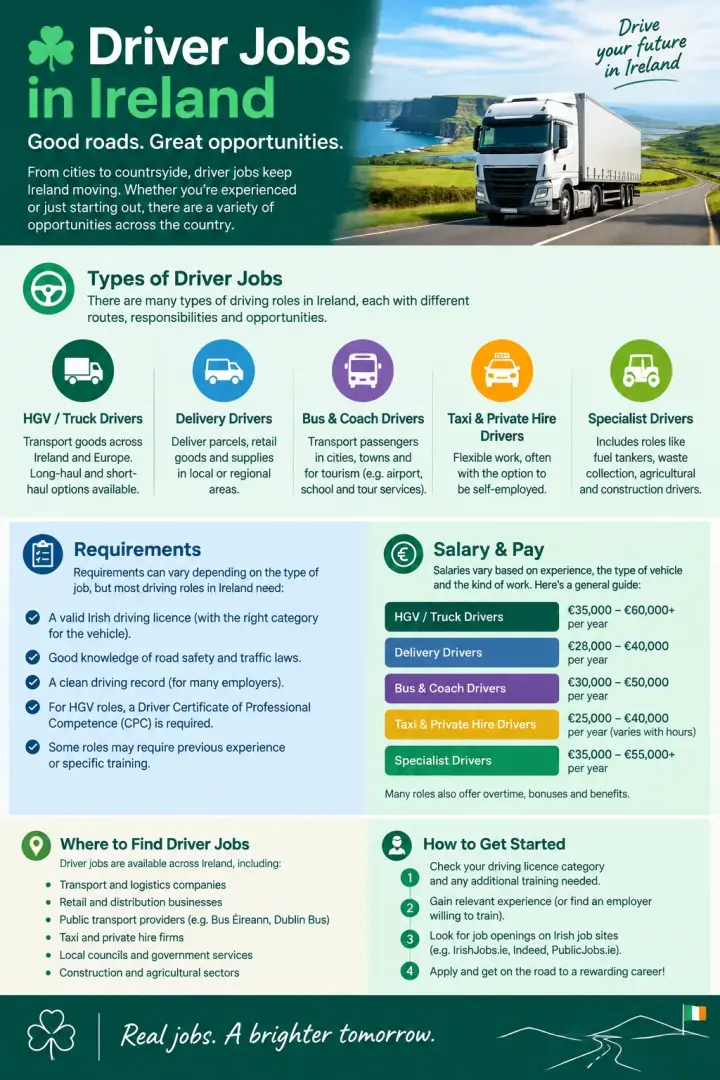
Delivery Driver Jobs
Delivery drivers bring parcels, groceries, meals and other goods to homes or businesses. Many positions use a car or van, although some employers need drivers with a licence for a larger vehicle.
You might work directly for a retailer or logistics company, through an agency, or as a self-employed contractor. Check whether the vehicle is supplied and who pays for fuel, insurance, maintenance and parking. A rate that looks good at first can feel very different once those costs come out of your pocket.
Van Driver Jobs
Van driver roles often involve a set route, collections from suppliers or multiple deliveries throughout the day. You could be carrying anything from medical supplies to furniture.
Many vans can be driven on a category B licence, but don’t assume that applies to every vehicle. The permitted weight of the vehicle and any trailer matters, so check the details in the job advertisement or ask the employer.
HGV Driver Jobs
Heavy goods vehicle, or HGV, drivers move freight using larger trucks. Jobs range from local distribution and construction deliveries to long-distance routes within Ireland or abroad.
Depending on the vehicle, you’ll generally need a category C or C1 licence. A suitable trailer entitlement, such as CE, may also be required. Professional HGV drivers usually need Driver CPC as well, unless an exemption applies.
Some employers look for experience with refrigerated goods, containers, tipper trucks or articulated vehicles. Others may consider newly qualified drivers, especially if they offer their own induction and training.
Bus and Coach Driver Jobs
Bus and coach drivers work on city routes, regional services, school transport, private hire and tourism trips. These jobs suit people who are comfortable dealing with passengers as well as driving larger vehicles.
A suitable category D or D1 licence is generally required, along with Driver CPC for most professional roles. Some employers recruit trainee drivers and support them through the necessary training, so it’s worth checking vacancies even if you don’t yet hold a bus licence.
Taxi and Private Hire Driver Jobs
Taxi and other small public service vehicle, or SPSV, work involves different licensing requirements from ordinary car driving. You’ll need an SPSV driver licence, and the vehicle used must be appropriately licensed too.
The National Transport Authority provides information on the SPSV entry test and vehicle requirements, while An Garda Síochána handles the driver licence application. If you’re considering this route, check the current rules and costs before buying or renting a vehicle.
What Licence Do You Need to Drive for Work?
The licence you need depends on the vehicle and the work. A full category B licence is a common starting point for car and many van jobs. For heavier goods vehicles or passenger vehicles, you’ll generally need an additional category.
- Category B: Commonly used for cars and vans with a maximum authorised mass of up to 3,500 kg, subject to the licence rules.
- Category C1: Covers certain goods vehicles over 3,500 kg and up to 7,500 kg.
- Category C: Covers larger goods vehicles over 3,500 kg.
- Category D1 or D: Used for certain minibuses and larger passenger vehicles, respectively.
- Trailer entitlements: An additional entitlement may be needed when towing a trailer, depending on the vehicle and trailer combination.
Employers may also ask how long you’ve held your licence and whether you have penalty points. Always check the exact requirements for the advertised role. The Road Safety Authority (RSA) and the National Driver Licence Service (NDLS) provide guidance on licence categories and applications.
What Is Driver CPC?
Driver Certificate of Professional Competence, usually called Driver CPC, is a professional qualification required by most people who drive trucks or buses for work. There are exemptions, but you shouldn’t assume one applies to your job without checking.
If you’re starting out, the RSA explains the initial qualification process. Qualified drivers also need to keep their CPC up to date through periodic training. Employers often ask to see your Driver Qualification Card when you apply.
Can You Use a Foreign Driving Licence in Ireland?
Some foreign licences can be used in Ireland, while others may need to be exchanged or replaced depending on where they were issued, how long you’ve lived in Ireland and the licence category. The rules can differ for visitors and residents.
Before accepting a driving job, check the latest NDLS guidance for your particular licence. Also confirm whether your professional qualifications, such as Driver CPC, are recognised for the work you plan to do.
Skills Employers Look For
A valid licence gets you through the first filter, but employers usually want more than that. Drivers often work independently and represent the company when they meet customers.
- Safe driving: Following road rules, checking the vehicle and reporting defects promptly.
- Reliability: Turning up on time and keeping the employer informed if a delivery is delayed.
- Route planning: Using maps or navigation apps and allowing time for traffic and collections.
- Customer service: Being polite and clear when dealing with customers, passengers and dispatch teams.
- Physical ability: Handling goods safely where loading and unloading are part of the job.
- Record keeping: Completing delivery paperwork, vehicle checks and other required records accurately.
For specialist roles, extra qualifications can help. These might include ADR training for carrying dangerous goods or experience using a tail lift. A forklift certificate may be useful for some warehouse-based jobs, though it isn’t a requirement for every driver.
Driver Salaries and Pay in Ireland
There’s no single rate for driver jobs in Ireland. Pay varies by licence category, location, experience, shift pattern and the type of goods or passengers carried. A local van role and an overnight HGV job can have very different rates and responsibilities.
When comparing offers, look beyond the headline hourly or annual figure. Ask whether overtime, night work, weekends and public holidays are paid at different rates. For longer routes, check whether any overnight or meal allowances apply and what expenses are covered.
If you’re offered contract work, establish whether the stated rate is before expenses and tax. Self-employed drivers may need to budget for their own vehicle, insurance, fuel, repairs and time off. Employees and genuinely self-employed contractors have different rights and obligations, so make sure you understand the arrangement before agreeing to it.
Working Hours and Conditions
Driving schedules can vary widely. A grocery delivery job may involve evenings and weekends, while a distribution role could start before dawn. Coach and taxi work may be busiest when other people are off work.
For many HGV and bus journeys, drivers’ hours and tachograph rules apply. These rules set limits on driving time and require breaks and rest periods. There are different rules and exceptions depending on the vehicle and journey, so check the guidance that applies to your work rather than relying on a general summary.
Before accepting a role, ask about the expected start and finish times, average number of stops, loading duties and how schedules are managed when traffic or delays affect the route. Honestly, those details can tell you more about the day-to-day job than the title alone.
Where to Find Driver Jobs in Ireland
Start with the main Irish job boards and employer career pages. Search using both the job title and the licence category you hold. For example, try terms such as “van driver jobs Dublin”, “CE driver jobs Ireland” or “bus driver jobs Cork”.
You can also look for vacancies through:
- Logistics and haulage company websites.
- Supermarket and retail career pages.
- Bus and coach operator websites.
- Recruitment agencies that specialise in transport and warehousing.
- Local employers, including builders’ providers and food distributors.
- Intreo and JobsIreland services.
Keep your search flexible. A job listed as a distribution operative, multi-drop driver or transport assistant may include the driving work you’re looking for. If you’re newly qualified, search for trainee, entry-level or newly qualified driver roles as well.
How to Apply for a Driving Job
A straightforward CV is often enough, provided it makes your qualifications easy to find. Put your licence categories near the top and list any relevant cards or certificates, including Driver CPC and a digital tachograph card where applicable.
For each previous role, mention the type of vehicle you drove, the area you covered and the work you carried out. If you handled deliveries, say whether they were multi-drop, business-to-business or customer-facing. There’s no need to include private document numbers on a CV; an employer can request the relevant documents later in the process.
If you’re new to professional driving, highlight transferable experience. Customer service, warehouse work, route planning and handling paperwork can all be relevant. A short cover note explaining why you want the role and when you’re available can help too.
Questions to Ask Before Accepting an Offer
- Am I an employee or a self-employed contractor?
- Is the vehicle provided, and who pays for fuel and insurance?
- What are the usual hours, routes and number of stops?
- Does the role involve loading, heavy lifting or overnight stays?
- How are overtime, allowances and expenses handled?
- What training and support are available?
Be wary of vacancies that ask for upfront payments, promise unusually high earnings without explaining the work, or avoid giving clear company details. Check the employer independently before sharing sensitive documents.
Working in Ireland as an International Applicant
Before applying, make sure you have the right to work in Ireland and can legally drive the vehicle involved. These are separate questions: holding a valid driving licence doesn’t automatically give you permission to work.
Employment permit eligibility depends on your circumstances and the occupation. Rules can change, so check the current guidance from the Department of Enterprise, Tourism and Employment and Irish immigration authorities. If an employer offers sponsorship, ask for the details in writing and verify the requirements yourself.
Driver Jobs in Ireland: Frequently Asked Questions
Can I get a driver job with no experience?
Yes. Some delivery and van roles accept applicants without professional driving experience, provided they meet the licence and insurance requirements. Trainee bus and HGV opportunities may also be available. Read the advert carefully, as some employers require a minimum period holding a full licence.
Do all delivery drivers need their own vehicle?
No. Many employers provide a van or other vehicle, while some courier and contract roles expect you to use your own. Ask who covers insurance, fuel, maintenance and any equipment before you accept.
Do I need Driver CPC for a van job?
Not usually for an ordinary category B van role. Driver CPC generally applies to professional truck and bus driving, subject to the relevant rules and exemptions. If the job involves a larger vehicle, check the requirements with the employer and the RSA.
Are part-time driver jobs available?
Yes. Part-time work can be found in delivery, passenger transport and other areas, although shifts may include evenings or weekends. Search for part-time and flexible roles, and confirm the guaranteed hours before accepting an offer.
What documents should I have ready?
Keep your driving licence and proof of your right to work available, along with any role-specific documents such as a Driver Qualification Card, tachograph card or SPSV driver licence. The employer can tell you which documents are needed for the position.
Finding the Right Driving Role
There are driver jobs across Ireland for different levels of experience, from local deliveries to specialist freight and passenger transport. Start with the licence and qualifications you have, then compare the hours, pay structure and costs—not just the job title.
If you want to move into HGV or bus driving, look at the training requirements and ask employers about trainee opportunities. A little research upfront can help you find a role that fits both your qualifications and your life outside work.