


Packing Jobs in Australia: A Practical Guide for Job Seekers
Packing jobs are a popular way to get started in Australia’s warehouse, manufacturing and agriculture industries. You’ll find opportunities in big cities, regional towns and rural areas, with roles ranging from packing online orders to sorting fresh produce.
Some employers offer training on the job, so you don’t always need experience. But the work can be physical, shifts vary, and pay depends on the job and the employment arrangement. Here’s what to know before you apply.
What Are Packing Jobs?
A packing job usually involves preparing products for storage, transport or sale. That might mean putting clothes into parcels, checking food packaging, labelling boxes or sorting fruit on a production line.
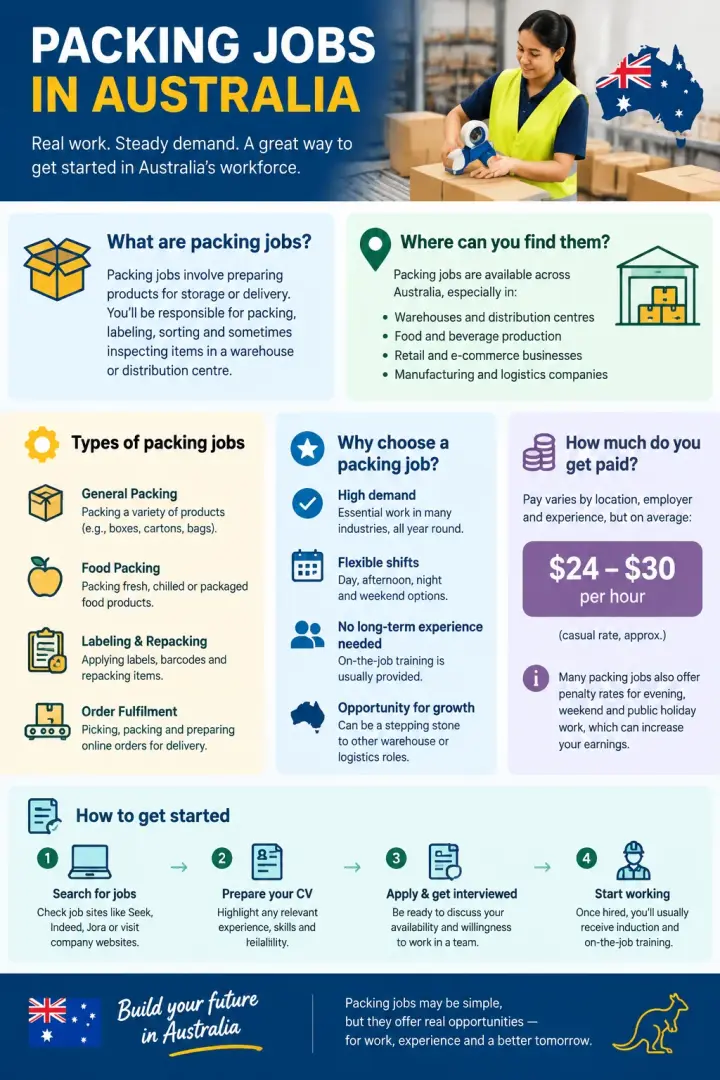
The exact tasks depend on the workplace. A warehouse packer might fill online orders, while a food packer might work beside a conveyor belt. Some jobs combine picking and packing, which means collecting items from shelves as well as preparing them for dispatch.
Common packing job duties
- Picking products from shelves or storage areas
- Packing items safely into boxes, bags or other containers
- Checking quantities, labels and product quality
- Using barcode scanners or basic computer systems
- Moving stock with trolleys or pallet jacks
- Keeping work areas clean and following safety procedures
- Preparing orders for delivery or collection
Speed matters in many packing roles, but accuracy matters too. Sending the wrong item or using the wrong label can create extra work for everyone down the line.
Types of Packing Jobs in Australia
Warehouse packing jobs
Warehouse packers prepare products for stores, businesses and online shoppers. Depending on the employer, you could be packing anything from books and clothing to hardware or medical supplies.
These jobs often involve standing, walking and lifting throughout a shift. Some warehouses operate early in the morning, at night or on weekends, so check the roster before accepting an offer.
Picker and packer jobs
Picker packers collect items for an order and then pack them for dispatch. You might use a handheld scanner to find products and confirm that you’ve picked the right size or quantity.
Search for both “picker packer jobs” and “warehouse jobs” when looking online. Employers don’t always use the same job title, even when the duties are similar.
Food packing jobs
Food packing roles can involve weighing, sealing, labelling and checking products on a production line. You may work with baked goods, meat, dairy, snacks or other packaged foods.
Hygiene is a big part of the job. Employers may require protective clothing, hairnets or gloves, and some workplaces are cold. Previous food-handling experience can help, although many entry-level roles include training.
Fruit and vegetable packing jobs
Produce packing jobs are often found near farms and regional food-processing facilities. Workers may sort fruit by size and quality, remove damaged produce, pack boxes and prepare pallets for transport.
These roles can be seasonal, with hours changing according to the harvest and weather. Before travelling for a job, ask when work is expected to start, how long it may last and whether accommodation is available.
Factory and manufacturing packing jobs
In a factory, packing may be the final step before goods leave the production line. Duties can include checking finished products, assembling cartons and recording batch details. Some employers also offer machine operator or quality-control opportunities as you gain experience.
Where to Find Packing Jobs in Australia
Packing jobs are available across the country, but the type of work varies by location. Sydney, Melbourne, Brisbane, Perth and Adelaide have large warehouse and distribution networks. Regional areas often have opportunities in agriculture, food processing and seasonal produce packing.
Good places to search include:
- Australian job websites such as SEEK, Indeed and Workforce Australia
- Company career pages for retailers, logistics businesses and food manufacturers
- Labour hire and recruitment agencies
- Local employment services and community job boards
- Direct enquiries with farms, packhouses and factories
Try location-based searches such as “packing jobs Melbourne”, “warehouse packer Brisbane” or “fruit packing jobs regional Australia”. You can also add terms like “casual”, “night shift” or “no experience” to narrow the results.
Job listings can be competitive, so apply promptly and keep your contact details current. Honestly, a clear application tailored to the role is usually more useful than sending the same vague résumé everywhere.
Packing Job Pay and Employment Types
There’s no single pay rate for packing jobs in Australia. Your pay can depend on the industry, your duties, age, experience, location and whether you’re a casual, part-time or full-time employee. An award, enterprise agreement or employment contract may also affect your conditions.
Some roles offer extra rates or allowances for overtime, weekends, public holidays or certain shifts. Casual employees may receive a casual loading instead of some paid leave entitlements. Don’t assume every advertised hourly rate includes the same extras: ask for a breakdown.
Before accepting a job, check:
- Your base hourly rate and how often you’ll be paid
- Whether the role is casual, part-time or full-time
- Any applicable award or enterprise agreement
- Rates for overtime, weekends and public holidays
- Expected shift lengths and whether hours are guaranteed
- Any deductions for accommodation, transport or equipment
Employees must be paid at least their applicable legal minimum. Use the Fair Work Ombudsman’s website and pay tools to check current rates and entitlements for your circumstances. Employers generally also have superannuation obligations for eligible employees.
Are packing jobs paid per hour or per piece?
Many warehouse and factory roles are paid hourly. In some agricultural work, a piece rate based on output may be used. Specific rules and minimum protections can apply, depending on the award and arrangement. If you’re offered a piece rate, get the details in writing and check the current rules with the Fair Work Ombudsman before agreeing.
Do You Need Experience to Get a Packing Job?
Not always. Many employers hire entry-level workers and provide training in their own systems. A willingness to learn, a reliable attitude and the ability to follow instructions can make a difference.
That said, previous experience in retail, hospitality, cleaning, manufacturing or farm work can be relevant. These jobs often involve teamwork, working to a schedule and following safety rules—all useful skills in a packing environment.
Skills employers often look for
- Attention to detail when checking products and labels
- Reliability and punctuality
- Ability to follow instructions and workplace procedures
- Comfort with repetitive tasks and standing for long periods
- Basic reading, counting and communication skills
- Awareness of safe lifting and manual-handling practices
- Ability to work independently or as part of a team
Some jobs require you to lift a stated weight, pass a pre-employment assessment or work in a refrigerated area. Read the description carefully, and ask questions if a requirement isn’t clear.
Do you need a forklift licence?
Most basic packing jobs don’t require a forklift licence. However, a relevant high-risk work licence may be needed if the role involves operating a forklift or certain order-picking equipment. Employers should explain the equipment used and the licence required. Never assume a general packing induction qualifies you to operate machinery.
How to Apply for Packing Jobs
A straightforward application can work well. Start with a résumé that makes it easy for an employer to see your availability, relevant skills and recent work history.
1. Match your résumé to the job
Read the ad and highlight experience that fits. If you’ve handled stock in a shop, worked quickly during busy service periods or followed hygiene procedures, say so. You don’t need to have held the exact title “packer” for your experience to be useful.
For example, you could describe relevant duties like this:
- “Checked incoming stock and organised products in storage areas.”
- “Maintained a clean work area and followed food safety procedures.”
- “Worked with a team to complete tasks during busy shifts.”
Keep examples truthful and specific. If you’ve used barcode scanners, pallet jacks or inventory software, include that too.
2. Be clear about your availability
Many employers need people for early starts, afternoon shifts or weekends. Mention the days and hours you can genuinely work, along with whether you have reliable transport. If public transport is your plan, check the timetable against the shift before applying.
3. Prepare for a short interview
You may be asked about your previous work, physical requirements, availability and approach to safety. Some employers conduct a phone screening first, followed by an interview or workplace assessment.
I’d also use the interview to ask about the day-to-day work. Find out how long shifts are, what you’ll be packing, how training works and who supplies any required protective equipment.
Packing Jobs for Backpackers and Visa Holders
Seasonal produce packing and casual warehouse work can appeal to backpackers and other temporary visa holders. However, your right to work and any restrictions depend on your individual visa conditions.
Check your conditions through the Department of Home Affairs and its Visa Entitlement Verification Online service before accepting a role. If you’re considering work to meet requirements for a further visa, check the current rules carefully. Not every packing job or location necessarily qualifies, and requirements can change.
Visa holders have workplace rights in Australia. You can seek information from the Fair Work Ombudsman about pay, conditions and workplace issues. Keep your contract, timesheets and payslips, particularly if you’re moving between seasonal jobs.
How to Spot a Packing Job Scam
Most job ads are genuine, but it pays to be cautious, especially when applying from overseas or arranging regional work remotely. Be wary of anyone who promises guaranteed work or a visa in return for a payment.
- Check the business name and look for an official website and contact details.
- Be cautious if you’re asked to pay upfront to secure a job.
- Ask for the pay rate, location, duties and employment terms in writing.
- Don’t share identity or bank details until you’ve checked who is requesting them and why.
- Be wary of pressure to travel or sign documents without time to review them.
- Check accommodation costs and conditions before committing to a regional role.
If a recruiter or labour hire provider is involved, ask who your employer will be and who pays you. Some Australian states have labour hire licensing requirements, so check the relevant state regulator where applicable.
What’s It Like Working as a Packer?
Packing work can suit people who like practical tasks and a clear routine. You’ll often see what you’ve accomplished by the end of a shift, and some workplaces offer a friendly team environment. Flexible shifts can also be helpful if you’re studying or balancing other commitments.
On the other hand, the work can be repetitive and tiring. You may spend hours on your feet, work to productivity targets or deal with changing rosters. Casual hours can fluctuate, particularly in seasonal industries.
Ask about breaks, lifting requirements and training before you start. A good employer should explain safe procedures and provide a way to report hazards or injuries.
Can Packing Jobs Lead to Other Work?
Yes. A packing role can be a starting point for other jobs in warehousing, logistics, production or agriculture. With experience and any required training or licences, you might move into stock control, dispatch, machine operation, team leadership or supervision.
If you’d like to progress, let your supervisor know. Learning how orders are tracked, asking about internal vacancies and taking part in available training can help you build useful skills.
Frequently Asked Questions About Packing Jobs
Can I get a packing job with no experience?
Yes, some Australian employers offer entry-level packing jobs with on-the-job training. Show that you’re reliable, can follow instructions and are available for the shifts listed. Relevant experience from other industries is worth including on your résumé.
Are there part-time packing jobs in Australia?
Yes. Packing roles may be advertised as full-time, part-time or casual. Hours vary by employer, and casual shifts may change from week to week. Check the employment type and expected roster before accepting.
Are packing jobs physically demanding?
They can be. Many involve standing, walking, bending or repetitive movements, and some require lifting. Physical demands vary, so ask the employer about the specific tasks and any weight requirements.
What should I wear to a packing job interview?
Clean, tidy and practical clothing is usually a sensible choice. If you’ll be touring a warehouse or completing an assessment, ask whether you need enclosed shoes or other safety gear.
How do I find legitimate packing jobs near me?
Search established job sites and employer career pages using your suburb or region. Check the employer’s details, read the terms carefully and use Fair Work resources if you have questions about pay or conditions.
Whether you’re after your first job, seasonal work or a move into logistics, packing can be a practical place to start. Take the time to compare roles, check your entitlements and find a shift that fits your life.