


Restaurant Jobs in the United Arab Emirates: A Practical Guide
From busy Dubai cafés to hotel restaurants in Abu Dhabi and neighborhood eateries in Sharjah, the UAE has plenty of places to build a career in hospitality. Restaurant jobs range from entry-level waiter and kitchen assistant roles to specialist chef and management positions.
But finding the right job isn't just about getting an offer. You'll want to understand the pay, working hours, visa process and benefits before you sign anything. Here's what to look for and how to start your search.
What Types of Restaurant Jobs Are Available in the UAE?
Restaurants need people both on the floor and behind the scenes. The best role for you depends on your experience, language skills and whether you enjoy working with customers or prefer a kitchen environment.
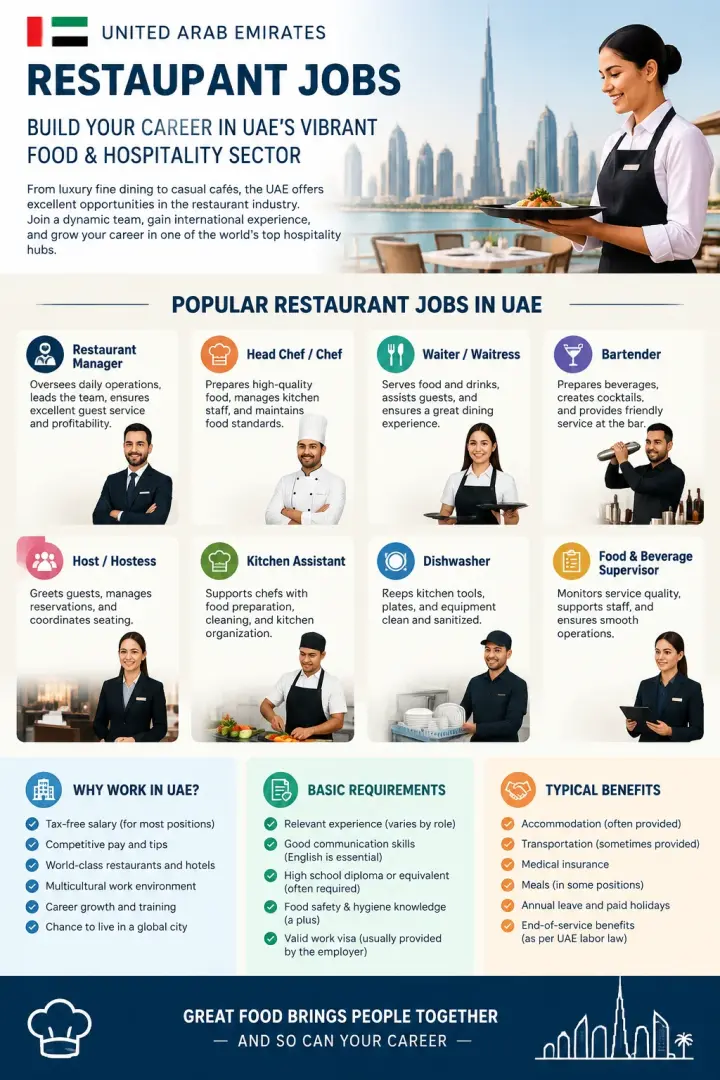
Front-of-house jobs
Front-of-house staff welcome guests, take orders and help keep service running smoothly. Common roles include:
- Waiter or waitress: Takes orders, serves food and handles customer requests.
- Host or hostess: Manages reservations, welcomes guests and organizes seating.
- Barista: Prepares coffee and other drinks, often in cafés or hotel outlets.
- Cashier: Processes payments and may help with takeaway orders.
- Restaurant supervisor: Coordinates shifts, supports staff and handles service issues.
- Restaurant manager: Oversees the team, customer experience, budgets and daily operations.
Note that some employers use different job titles for similar work. Read the duties carefully instead of applying based on the title alone.
Kitchen jobs
If you enjoy cooking or want to learn how a professional kitchen works, there are opportunities at several levels:
- Kitchen helper or steward: Cleans equipment, washes dishes and supports basic kitchen tasks.
- Commis chef: Assists with food preparation and develops skills under senior chefs.
- Chef de partie: Runs a particular kitchen section, such as pastry, grill or sauces.
- Sous chef: Helps lead the kitchen and may manage it when the head chef is away.
- Head chef or executive chef: Leads kitchen operations, menu planning and the culinary team.
Depending on the restaurant, you might also find openings for bakers, pastry chefs, pizza makers, sushi chefs and cooks with experience in specific cuisines.
Where to Find Restaurant Jobs in the UAE
Dubai and Abu Dhabi have large hospitality markets, with restaurants in hotels, malls, business districts and residential communities. Sharjah, Ajman, Ras Al Khaimah and the other emirates also offer opportunities, including roles in local restaurants, resorts and cafés.
Try a mix of these search methods:
- Check established UAE job websites and professional networking platforms.
- Visit the careers pages of hotel groups, restaurant chains and hospitality companies.
- Look at restaurant websites and verified social media accounts for hiring announcements.
- Ask former colleagues, classmates or friends in hospitality about legitimate openings.
- Attend hiring events advertised by employers or reputable recruiters.
Search with specific terms such as “waiter jobs in Dubai,” “commis chef jobs in Abu Dhabi” or “restaurant supervisor UAE.” You can also add words like “hotel,” “café” or a cuisine you're experienced in to narrow the results.
Restaurant Job Salaries in the UAE
Restaurant salaries vary widely. A small café and a luxury hotel may offer very different packages for the same job title. As a rough guide, advertised monthly base pay may fall within these ranges:
- Kitchen helper or steward: around AED 1,200–2,500
- Waiter, waitress or cashier: around AED 1,500–4,000
- Barista: around AED 2,000–4,500
- Commis chef: around AED 2,000–4,000
- Chef de partie: around AED 3,500–7,000
- Restaurant supervisor: around AED 3,500–7,000
- Restaurant manager: around AED 6,000–15,000 or more
These are illustrative estimates, not guaranteed rates. Experience, location, employer and restaurant category all make a difference. Senior chefs and managers at high-end properties may earn more, while some entry-level offers may fall outside these ranges.
Honestly, the number on its own doesn't tell the whole story. Ask whether accommodation, transport, meals, health insurance or a service charge are included. An offer with a lower salary but housing provided could be worth more to you than a higher salary that leaves you paying all your own expenses.
What about tips and service charges?
Some restaurant staff receive tips or a share of a service charge, but arrangements differ by employer. Don't assume either is guaranteed. Ask how tips are distributed, whether deductions apply and whether any service charge is written into your offer.
Skills and Qualifications Employers Look For
You don't always need a hospitality degree to get an entry-level restaurant job. Employers often care just as much about reliability, a willingness to learn and the ability to work well with a team.
Useful skills include:
- Clear communication and a friendly approach to customers
- Basic English for taking orders and speaking with colleagues
- Food safety and hygiene awareness
- Cash handling or point-of-sale experience
- Time management during busy service periods
- Knowledge of a particular cuisine, coffee preparation or restaurant software
- Leadership and stock-control skills for senior positions
Other languages can be an advantage in a multicultural market, but requirements depend on the employer. For kitchen roles, food safety training or culinary qualifications can help. Some employers may provide required training after hiring.
How to Apply for Restaurant Jobs in the UAE
1. Prepare a clear CV
Keep your CV easy to scan. Include your contact details, location, relevant experience, languages and skills. For each previous role, mention the restaurant type and what you actually did. For example, explain whether you handled table service, trained new staff or worked on a particular kitchen section.
If you're new to hospitality, include transferable experience. Retail, customer service, volunteering and school projects can all show that you can communicate and work with others.
2. Tailor your application
Read the job description and highlight the experience that matches it. A barista application should mention coffee equipment and drink preparation if you have that experience. A chef application might focus on cuisine, station responsibility and food safety.
Be honest about what you can do. It's much easier to learn on the job than to explain a skill you claimed but don't have.
3. Get ready for an interview or trial
Employers may ask how you handle complaints, work under pressure or deal with a busy shift. Kitchen applicants might be asked about preparation methods and hygiene. Some restaurants may arrange a practical assessment; clarify its length and terms beforehand, and check the applicable rules before doing productive work.
Dress neatly, arrive on time and bring copies of any documents the employer has requested. This is also your chance to ask questions, not just answer them.
Work Permits and Visas for Restaurant Employees
If you're moving from abroad, your employer will generally need to arrange the appropriate UAE work permit and residence process before you can legally work. Don't start a restaurant job while on a tourist or visit visa. Specific procedures can vary depending on the employer and whether the job is in mainland UAE or a free zone.
Ask the employer to explain the process, the documents needed and the expected timeline. You may need a valid passport, photographs and other documents, with medical fitness screening and Emirates ID steps forming part of the residence process where applicable.
Recruitment and employment-related costs that the employer is legally responsible for should not be passed on to the worker. Be cautious if someone demands money for a job offer, work permit or recruitment fee. Check current requirements with the UAE Ministry of Human Resources and Emiratisation (MOHRE), the relevant free zone authority or an official UAE government source.
Working Hours, Leave and Your Contract
Restaurant work often includes evenings, weekends and public holidays. Split shifts are also possible, so ask what a typical schedule looks like before accepting an offer.
Under UAE private-sector labour rules, normal working hours are generally eight hours a day or 48 hours a week, subject to applicable exceptions and arrangements. Working hours are generally reduced by two hours a day during Ramadan. Breaks and overtime rules also apply, so check your contract and the current official guidance for your situation.
Eligible private-sector employees generally receive 30 days of annual leave after one year of service. Different rules apply during the first year and to some employment arrangements. Ask how weekly rest days, public holidays and overtime will be handled in your role.
Before signing, check that your written offer and contract clearly state:
- Your job title and main duties
- Basic salary, allowances and payment arrangements
- Working hours, rest days and overtime terms
- Accommodation, meals, transport and insurance, if provided
- Probation period, leave and notice requirements
- Who arranges the work permit and residence process
Keep copies of the documents you sign. If anything in the contract differs from what you were promised, ask for clarification before you agree.
How to Spot a Restaurant Job Scam
Not every attractive job advertisement is genuine. Be especially careful with offers that promise unusually high pay for little experience or pressure you to make a quick decision.
Watch out for these warning signs:
- A recruiter asks you to pay upfront for a job or work permit.
- The employer won't give you a written offer or verifiable company details.
- Messages come from an address or account that doesn't match the business.
- You're told to begin working on a tourist visa.
- The advertised salary or benefits suddenly change without a clear explanation.
Verify the restaurant independently using its official website or publicly listed contact details. Don't send sensitive personal documents to an unverified contact, and never rely on a verbal promise alone.
Questions to Ask Before Accepting an Offer
A few practical questions can prevent a lot of confusion later:
- Is the salary listed basic pay, or does it include allowances?
- Is accommodation provided? If so, where is it and who will I share with?
- Are meals and transport included during working days?
- What are the usual shift patterns and weekly rest days?
- How are overtime, tips and service charges handled?
- Which company will be my legal employer?
- Who will arrange my work permit and residence paperwork?
Compare the answers against your own budget and priorities. A job in a well-known restaurant might look exciting, but the schedule, commute and support you receive matter too.
Can You Grow Your Restaurant Career in the UAE?
Yes. Many restaurant roles offer a chance to build practical skills and move into more senior positions. A waiter might progress to supervisor, while a commis chef can develop toward chef de partie and beyond. Progress depends on the employer, performance, training and available openings, so it's worth asking about development opportunities at interview.
If you're ready to apply, start with a focused CV, search for roles that match your experience and verify each employer. Take your time reviewing the full package. The right restaurant job should offer more than a good title: it should give you clear terms and a workplace where you can do your best work.
Frequently Asked Questions
Can I get a restaurant job in the UAE without experience?
Yes, some employers hire beginners for roles such as kitchen helper, steward, host or waiter. Customer service skills, basic English and a willingness to learn can help. Requirements vary by vacancy.
Do restaurants in the UAE provide accommodation?
Some do, particularly hotels and larger hospitality employers, but it's not included in every offer. Ask for the details in writing, including location, shared facilities and any deductions.
Is English required for restaurant jobs?
Many employers ask for basic or conversational English, especially in customer-facing roles. Kitchen requirements vary. Other languages may be useful depending on the restaurant and its customers.
Can I work in a UAE restaurant on a visit visa?
No. You need the appropriate authorization to work. Discuss the permit and residence process with your prospective employer and confirm the requirements through official UAE government sources.